
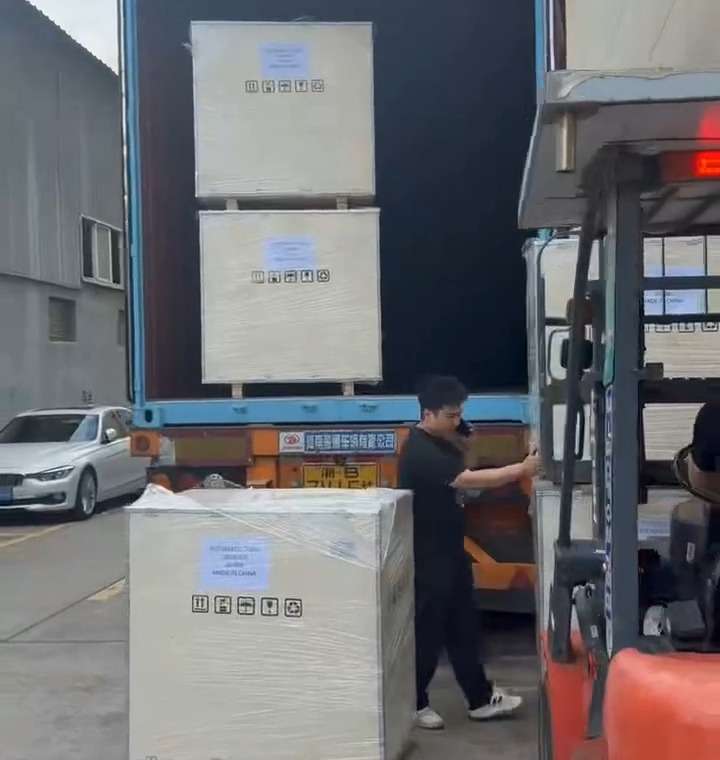
A machine that leaves the factory in perfect condition can still arrive damaged if it is poorly packed or badly secured in the container. Sea transport exposes equipment to moisture, salt air, vibration, crane lifts and forklift handling over several weeks. Export packing and container loading are therefore part of quality control, not an afterthought. This guide explains how machinery should be packed and loaded for export from China, based on what we check on the ground before every shipment.
1. Prepare the machine before packing
- Clean and dry the machine after the factory acceptance test, removing coolant, chips and moisture.
- Apply anti-rust protection to unpainted metal surfaces, guideways, spindles, shafts and precision parts.
- Drain or secure fluids according to the supplier’s instructions and shipping requirements.
- Lock moving parts such as tables, gantries, spindle heads, arms and doors with transport brackets.
- Remove and pack fragile parts such as touch screens, sensors and accessories separately where recommended.
- Label everything that has been removed so it can be reinstalled easily.
2. Choose the right packing method
- Wooden crates: fully enclosed crates on a strong base, the most common choice for small and medium machines. Wood must be treated to ISPM 15 standards (heat treated or fumigated) and marked accordingly for international shipping.
- Wooden skids with protective wrapping: for large machines that are lifted by crane, with the machine bolted to a timber base.
- Moisture barrier or vacuum packing with desiccant for sensitive equipment and long voyages.
- Stretch film and corner protection as an outer layer for dust and minor knocks.
Crates should have clear lifting points, centre of gravity marks, “this way up” and fragile markings, plus a packing list fixed to the outside.
3. Plan the container and loading
Before loading, confirm dimensions and weights of every crate and choose the right container: 20ft or 40ft standard, 40ft high cube for taller crates, or open-top and flat-rack containers for oversized equipment. Plan the loading sequence so the heaviest crates sit on the container floor and weight is distributed evenly along its length.
4. Secure the cargo inside the container
- Load crates with a suitable forklift, keeping them level and avoiding impacts.
- Block and brace crates with timber so they cannot slide during transit.
- Lash heavy items to container lashing points with straps or wire.
- Use dunnage bags or timber to fill gaps between crates.
- Stack only crates designed to carry weight on top.
5. Document the loading
Take photos and videos of the packed machines, the crate markings, the loading process, the secured cargo and the closed container with its seal number. These records are valuable if there is ever an insurance claim, and they reassure the buyer that the shipment was handled properly. Recently, for example, our team supervised the packing and container loading of knife sharpening machines for a client in Australia, documenting each crate as it went into the container.
6. Final checks before the container leaves
- Packing list matches crate numbers, contents and weights.
- ISPM 15 marks are visible on wooden packaging.
- Spare parts, tools, manuals and documents are packed and listed.
- Seal number is recorded and sent to the buyer with photos.
- Export documents are ready: commercial invoice, packing list, bill of lading and certificate of origin.
Frequently asked questions
Who is responsible for export packing?
Usually the supplier, but the standard should be specified in your purchase contract. Vague terms such as “export packing” are not enough; describe crate type, anti-rust treatment and markings.
Can machines from different suppliers share one container?
Yes. Consolidating in a warehouse in China often reduces freight cost per machine. See our guide to shipping machinery from China.
Do I need cargo insurance?
For valuable machinery it is strongly recommended. Good packing and loading records make claims much easier.
Let Supbon Sourcing handle packing and loading
Supbon Sourcing inspects machines before shipment, checks export packing, supervises container loading and sends you photo and video records of every step. Learn about our factory acceptance tests, import duties and HS codes and machinery sourcing in China.
Shipping machinery from China soon? Contact us for a free quote.