
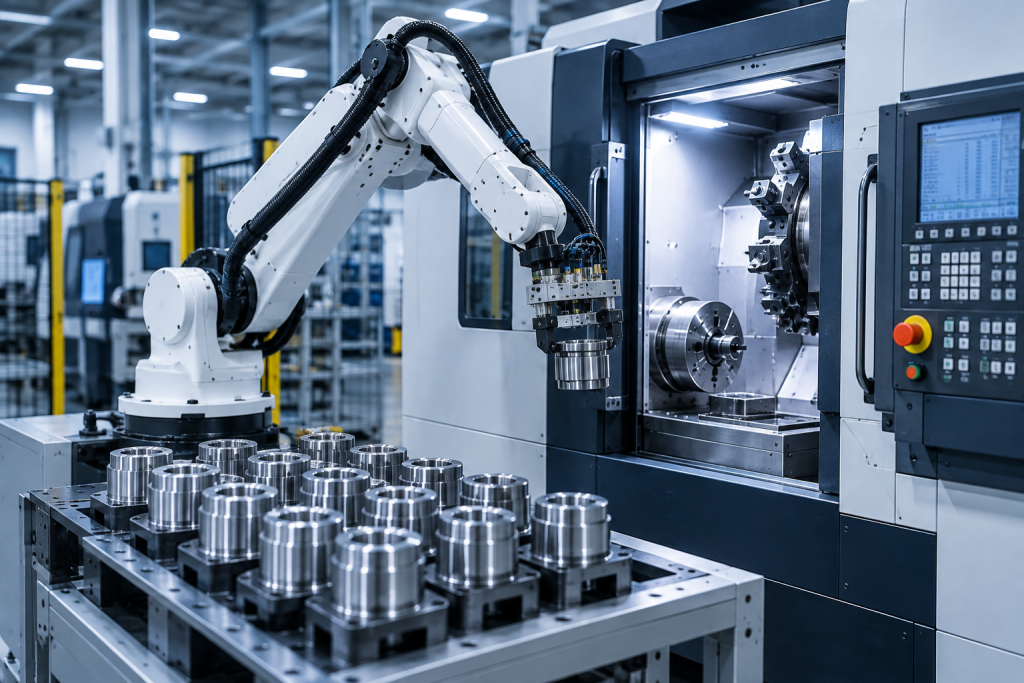
Burrs and sharp edges left after cutting, stamping, laser cutting, machining or casting can cause assembly problems, injuries and poor coating quality. Manual deburring with grinders and files is slow, inconsistent and labour-intensive. Deburring and edge-rounding machines automate this step and give repeatable results. China has become a major producer of deburring machines for sheet metal, machined parts and castings. This guide explains how to choose and source a deburring machine from China.
1. Match the machine to your parts
- Wide-belt and brush deburring machines for flat sheet metal parts after laser cutting, plasma cutting or punching. Parts pass through on a conveyor; abrasive belts and rotating brushes remove burrs, round edges and remove oxide layers.
- Vibratory and barrel finishing machines for small parts in bulk, using media to deburr and polish.
- Centrifugal disc finishing machines for faster, more intensive finishing of small parts.
- Robotic deburring cells for complex 3D parts, castings and machined components.
- Magnetic polishing machines for very small precision parts.
2. Information suppliers need
- Part materials: mild steel, stainless steel, aluminium, copper or others.
- Part sizes, thickness range and minimum part size (important for conveyor machines).
- Burr type: fine laser burrs, heavy plasma slag or punching burrs.
- Required result: burr removal only, edge rounding with a specific radius, oxide removal or surface finish.
- Throughput and whether one or both sides must be processed.
Send sample parts to shortlisted suppliers and ask for a processing video and the finished samples.
3. Key features to compare
- Working width and conveyor type (vacuum or magnetic table for holding parts).
- Number and configuration of processing units: belts, disc brushes, roller brushes.
- Wet or dry processing. Dry machines need good dust extraction; aluminium dust needs special care because of fire and explosion risk.
- Automatic thickness adjustment and abrasive wear compensation.
- Availability and cost of consumables: belts, brushes and media.
- Brands of motors, inverters and control systems.
4. Inspection before shipment
- Process your sample parts and check burr removal, edge radius and surface finish.
- Check that small parts are held securely and do not fall through the conveyor.
- Verify dust extraction connections or wet system function.
- Test safety guards, emergency stops and interlocks.
- Confirm consumable spare parts, manuals and voltage.
Frequently asked questions
Can one machine process both sides of a part?
Some machines have upper and lower processing units for double-sided deburring in one pass; others require parts to be flipped.
What are the running costs?
Mainly abrasive belts, brushes or media, plus electricity and dust extraction. Ask suppliers for consumable prices and expected service life for your parts.
Is a deburring machine worth it for small workshops?
If you process significant volumes of laser-cut or punched parts, automating deburring usually saves labour and improves consistency.
Source deburring machines with Supbon Sourcing
Supbon Sourcing helps fabricators source deburring and finishing machines from qualified Chinese manufacturers, organises sample processing, inspects machines and ships them to your door. You may also find our guides to laser welding machines, press brakes and shears and laser equipment sourcing in Jinan useful.
Need to automate deburring? Send us your parts for a free quote.