
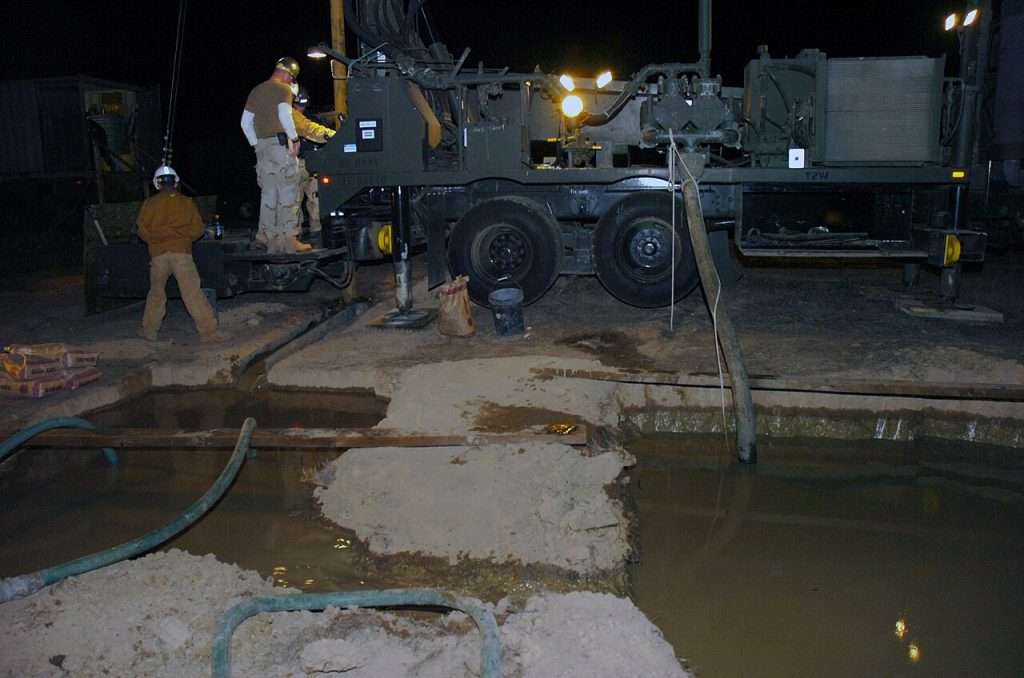
Water well drilling rigs are in steady demand from drilling contractors, NGOs, agricultural projects and geothermal installers, especially in Africa, the Middle East, Central Asia, Latin America and Southeast Asia. China produces a broad range of rigs: small trailer-mounted units, crawler rigs, truck-mounted rigs and multi-function machines that combine DTH (down-the-hole) air drilling with mud rotary drilling. Prices vary widely, and so does quality. This guide shows how to define the right rig and check it before it leaves China.
1. Specifications to define
- Target depth and diameter: the maximum well depth you will drill and the hole diameter at that depth. A rig rated “300 m” may only reach that depth with a small bit.
- Geology: hard rock, weathered rock, sand, clay or mixed formations. Hard rock favours DTH air drilling; loose formations usually need mud rotary drilling and casing.
- Drilling method: DTH, mud rotary, or a multi-function rig with both. Consider whether you need casing-while-drilling (for example with a drill-through casing system).
- Carrier: crawler, trailer or truck-mounted. Consider road access, terrain and local truck registration rules.
- Rotation head: torque and speed range, and pull-up / pull-down force, which define what tools and depths the rig can handle.
- Power: diesel engine brand and emission level required in your market, or electric drive for fixed sites.
- Rod handling: rod length, rod loader or carousel, and maximum rod load on the mast.
2. Key components and quality points
- Engine: confirm brand, model and that the engine dealer network covers your country.
- Hydraulic system: pump and motor brands, valve blocks, hose quality and cooling capacity for hot climates.
- Mast and feed system: welding quality, chain or cylinder feed design and guide wear pads.
- Air compressor: DTH drilling depends on enough air pressure and volume for the hammer size and depth. Many rigs ship without a compressor, so match one carefully; see our air compressor sourcing guide.
- Mud pump: flow and pressure for mud rotary drilling. Our industrial pump guide covers pump checks.
- Drilling tools: drill rods, DTH hammers, bits, tricone bits, casing and adapters. Thread type and standard must match across all tools.
3. Compliance and safety
- Check engine emission requirements and whether your country needs a specific emission stage for non-road mobile machinery.
- Truck-mounted rigs must meet your vehicle import and registration rules, which may limit chassis choice. See our guide to heavy trucks and special vehicles from Jinan.
- Rotating rods, the rotation head and wire ropes are serious hazards. Ask for guards, emergency stops at the control station, and clear warning labels in your language.
- For the EU and some other markets, CE marking and a declaration of conformity are required for the rig.
4. Testing before shipment (FAT)
A factory acceptance test for a drilling rig typically includes:
- Engine start, idle and full-load running; checking for leaks, noise and abnormal temperatures.
- Mast raising and lowering, feed up and down, and rotation at different speeds in both directions.
- Pull-up and pull-down force and rotation torque checks against the specification, as far as the factory test bench allows.
- Crawler or trailer travel test, brakes and steering.
- Where possible, a test drilling on the factory yard with your tools.
- Checking the tool list, spare parts, manuals and hydraulic and electrical diagrams.
5. Shipping and delivery
- Small crawler rigs often fit in a 40ft high cube or open-top container; larger crawler and truck rigs usually travel on flat racks or as RoRo cargo.
- Drain or protect fluids as required, disconnect batteries, and secure the mast in transport position.
- Ship drill rods, hammers and bits in strong crates with a detailed inventory.
See shipping machinery from China for container, flat rack and RoRo options.
6. Planning the complete drilling package
Experienced contractors rarely buy only a rig. A productive drilling unit usually also needs a compressor, mud pump or mud mixing system, a support truck, a generator for camp and tools, water pumps and casing and screen stock. Buying these in one consolidated order from China can reduce freight cost and ensure compatibility, provided each item is checked separately. Our guides on diesel generators and spare parts help with the rest of the package.
Frequently asked questions
Which drilling method should I choose?
DTH air drilling is fast in hard rock; mud rotary is better in loose sediments. Many contractors working in mixed geology choose a multi-function rig that can do both.
Why are some rig prices so low?
Low prices often reflect smaller engines, lighter masts, unknown hydraulic components or a lower real depth capability. Compare quotations on component brands and verified ratings.
What spare parts should I order with the rig?
Filters, seals, hoses, wear pads and common hydraulic parts, plus enough bits and a spare hammer. Ask the factory for a recommended two-year spare parts list.
Source water well drilling rigs with Supbon Sourcing
Supbon Sourcing, based in Jinan, Shandong, helps buyers define rig requirements, compare and verify manufacturers, match compressors and tools, inspect equipment and arrange shipping. Learn more about our construction machinery sourcing service.
Planning a drilling project? Contact Supbon Sourcing with your depth, diameter and geology and we will help you source a suitable rig from China.