
Almost every Chinese machinery supplier says its machines are “CE certified”. For an importer selling or using machinery in the European Economic Area, that phrase means very little on its own. CE marking is the manufacturer’s declaration that a machine meets all applicable EU legislation, backed by a technical file and a declaration of conformity. If the documentation is weak, the machine is unsafe or the marking is wrong, the importer can face market surveillance action, recalls and liability. This guide explains what to check when buying machinery from China. It is general information, not legal advice; for specific cases, consult a compliance specialist or notified body.
1. Understand which EU rules apply
- Machinery Directive 2006/42/EC: the main law for machinery today. It is being replaced by the Machinery Regulation (EU) 2023/1230, which applies from 20 January 2027. Machines placed on the market from that date must meet the new regulation.
- Low Voltage Directive 2014/35/EU and EMC Directive 2014/30/EU: relevant to the electrical equipment and electromagnetic compatibility of most electrically powered machines.
- Other legislation: depending on the product, for example the Pressure Equipment Directive, ATEX for explosive atmospheres, outdoor noise rules or RoHS for certain electrical equipment.
- Harmonised standards: such as EN ISO 12100 for risk assessment, EN 60204-1 for electrical equipment of machines, and product-specific type-C standards. Applying them gives a presumption of conformity.
For the UK, the UKCA regime has its own rules and timelines, so check the current UK guidance separately.
2. Know who is responsible
- The manufacturer carries out the conformity assessment, prepares the technical file, signs the EU declaration of conformity and affixes the CE marking.
- If the manufacturer is outside the EU, the importer must check that the conformity procedure has been carried out, that the machine bears CE marking and is accompanied by the required documents, and that the importer’s own name and contact address appear on the product or its documentation.
- If you place a machine on the market under your own brand or substantially modify it, you may be treated as the manufacturer and take on full responsibility.
3. Documents to request from the Chinese supplier
- EU declaration of conformity: naming the specific machine model and serial number, the legislation and standards applied, and signed by the manufacturer.
- Technical file: risk assessment, drawings, electrical schematics, calculations, test reports and a list of standards. The manufacturer must make it available to authorities on request; agree in the contract that it will be provided when needed.
- Instructions: a full operating and maintenance manual in the language of the country where the machine will be used.
- Component certificates: for safety-related parts such as light curtains, safety relays and emergency stop devices.
Write these requirements into your machinery purchase contract, including who pays if the machine fails compliance checks.
4. How to spot weak or fake CE claims
- A “CE certificate” issued by a private testing company that is not a notified body has no legal status by itself. It may be a useful test report, but it does not replace the manufacturer’s declaration.
- For machinery in the higher-risk categories (Annex IV under the Directive, Annex I under the new Regulation), check whether a notified body is required. You can verify notified bodies and their numbers in the European Commission’s NANDO database.
- Certificates that list a different model, a different company name, or only the EMC Directive for a complete machine are warning signs.
- A CE logo with incorrect proportions, or a nameplate missing the manufacturer’s name and address, model, serial number and year of construction, suggests a weak process.
Combine document checks with a broader supplier verification.
5. Check compliance physically before shipment
Paperwork must match the machine. During the factory acceptance test and pre-shipment inspection, check:
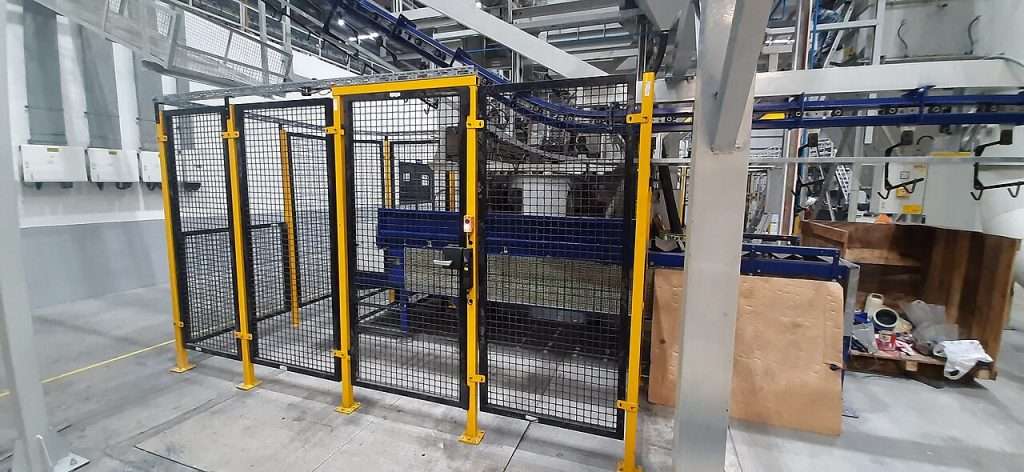
- Fixed and interlocked guards on all moving parts; no easy way to bypass interlocks.
- Emergency stops at each operating position, working correctly and resetting properly.
- Electrical cabinet: main disconnect switch, protective earthing, wire marking, cable glands and component ratings.
- Warning labels and pictograms, plus the CE nameplate with complete information.
- That the machine’s voltage and frequency match your supply.
6. Shipping and customs
- Customs and market surveillance authorities in the EU may check CE documentation at import. Keep the declaration of conformity and manuals easy to find.
- Ship manuals with the machine and keep digital copies.
Read our guides on customs clearance documents and shipping machinery from China.
Frequently asked questions
Is a CE certificate from a Chinese test lab enough?
No. It can support the technical file, but the legal basis for CE marking is the manufacturer’s conformity assessment and declaration of conformity, plus notified body involvement where required.
What changes with the new Machinery Regulation?
It applies from 20 January 2027 and updates safety requirements, including topics such as software, cybersecurity-related safety and digital instructions. Machines placed on the market from that date must comply with it, so discuss this with suppliers now for orders delivered near that date.
Can I make the machine compliant after it arrives?
Sometimes, but modifying machines locally is usually slower and more expensive than building compliance in at the factory. It may also make you responsible as the manufacturer.
Source CE-compliant machinery with Supbon Sourcing
Supbon Sourcing, based in Jinan, Shandong, helps buyers set compliance requirements in specifications and contracts, review supplier documents and inspect machines before shipment. Learn more about our machinery sourcing in China service.
Importing machinery into Europe? Contact Supbon Sourcing and we will help you source from suppliers that can support your compliance requirements.