
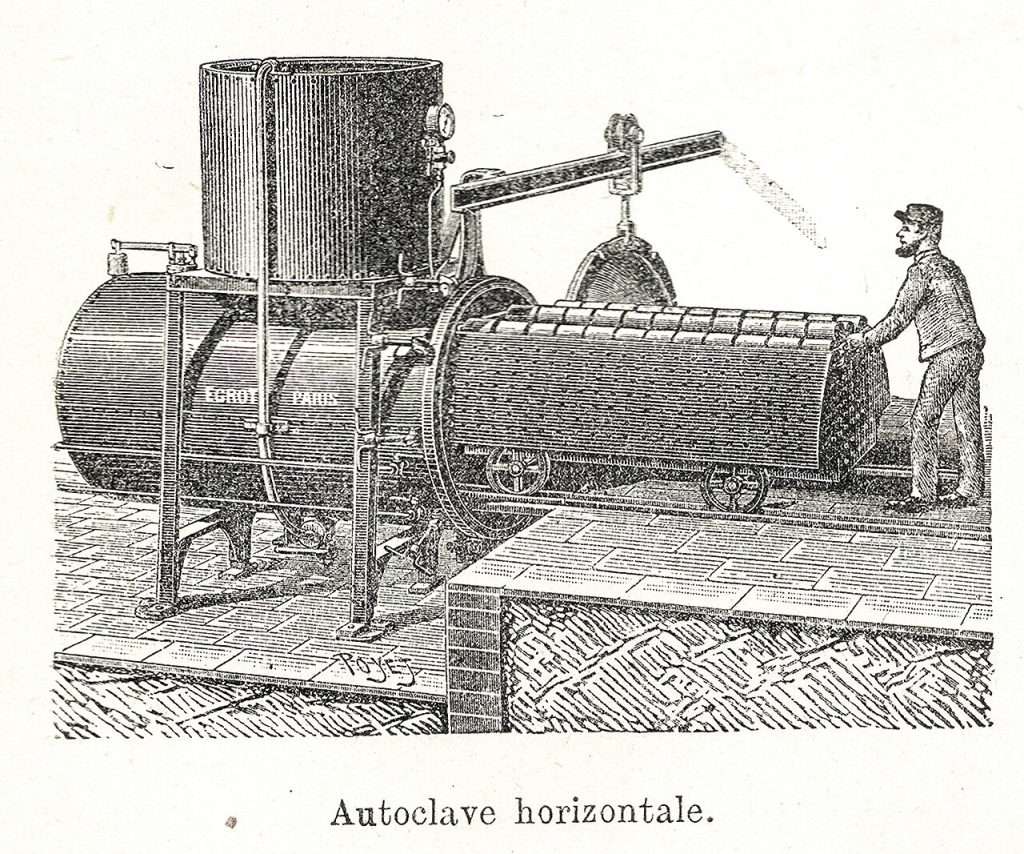
Short answer: choose a food retort by your container first, then by the heating method. Rigid metal cans can use a simple saturated steam retort, while pouches, trays, glass jars and plastic bottles usually need a water spray, water immersion or steam-air retort with controlled overpressure. After that, the factors that matter most are temperature uniformity, the control and recording system, pressure vessel compliance and the utilities your plant can supply.
This guide is written for food manufacturers, co-packers and equipment distributors who are buying a retort sterilizer (also called an autoclave or sterilization kettle) from a Chinese manufacturer. It covers the main retort types, the specifications to put in your RFQ, the red flags we see in quotations, and a pre-shipment checklist. For the wider picture of buying food equipment, see our food processing machinery sourcing guide.
What a retort does, and why the type matters
A retort heats sealed food containers under pressure to temperatures above 100 °C, typically around 110–130 °C, so that the product becomes commercially sterile and shelf stable. Ready meals, canned meat and fish, soups, sauces, pet food, beans, corn, milk drinks, herbal drinks and baby food are common examples.
The container is the most important input. A steel can is strong enough to resist the internal pressure when the product heats up. A pouch, a plastic tray or a glass jar with a lug cap is not. If the outside pressure is not controlled carefully during heating and especially during cooling, flexible packs can burst, seals can weaken and lids can lift. This is why a retort that works well for cans may be the wrong machine for pouches.
Main retort types compared
| Retort type | Heating medium | Best suited for | Strengths | Watch-outs |
|---|---|---|---|---|
| Saturated steam (full steam) | Pure steam, air vented out first | Metal cans, some rigid glass | Simple, fast heating, lower cost | No independent overpressure; venting must be validated; not for pouches |
| Water spray (top or side spray) | Recirculated process water heated through a heat exchanger, sprayed over the load | Pouches, trays, PP/PET bottles, glass jars, cans | Flexible, good overpressure control, small water volume | Spray nozzle layout and pump capacity decide uniformity |
| Water immersion | Containers fully submerged in hot water | Delicate pouches, large trays, glass | Very gentle, even heating, supports packs with buoyancy | Larger footprint and water volume; often a storage tank above |
| Steam-air mixture | Steam plus compressed air, mixed by a fan | Trays, pouches, cups | Fast heating with overpressure | Fan and air flow design are critical; harder to validate |
| Rotary / agitating | Any of the above, with the basket rotating | Viscous products, milk drinks, soups in cans or bottles | Shorter process time, better product quality | Higher price, more moving parts, clamping of baskets |
Many Chinese manufacturers build all of these types on the same shell. The difference lies in the piping, pumps, heat exchanger, controls and validation work, so compare the full scope, not just the vessel size.
How to choose: the questions to answer before you request quotes
- Which containers, and which sizes? List every package format, its dimensions, fill weight and maximum allowed pressure difference. If you plan new formats later, say so now.
- What daily output? Convert output into containers per cycle and cycles per shift. A typical cycle including loading, heating, holding, cooling and unloading often takes 60–120 minutes, but confirm with your process authority.
- What process? Target temperature, holding time and target F0 value come from your thermal process, which should be established by a qualified process authority, not by the machine supplier.
- Which market? Exports to the USA, the EU or the Middle East can bring specific rules on process records, pressure equipment and documentation.
- What utilities do you have? Steam pressure and capacity, cooling water temperature, compressed air, electrical supply (voltage and frequency) and drainage.
If your plant has no steam supply, the boiler is part of the project. See our industrial steam boiler sourcing guide for sizing and compliance points.
Specifications that matter in the RFQ
Vessel and capacity
- Internal diameter and effective length; Chinese retorts commonly range from about 700 mm lab or pilot units up to roughly 1,800–2,000 mm production vessels.
- Number of baskets or carts per vessel and the tray or basket dimensions, so you can calculate containers per cycle.
- Design pressure and design temperature. Many food retorts are designed for roughly 0.3–0.5 MPa and 140–150 °C, but confirm the values on the pressure vessel drawing.
- Material: stainless steel 304 is standard for food contact and wet parts; 316L may be requested for salty or acidic environments. Ask whether the shell, the internal piping and the baskets are all stainless steel.
- Door type: manual swing door, semi-automatic or automatic sliding door, and single-end or double-end (pass-through) layouts.
Heating, cooling and uniformity
- For water spray retorts, ask for the heat exchanger type (plate or tube) and confirm that process water does not mix with steam or cooling water.
- Circulation pump flow rate, number and position of spray nozzles or distribution plates.
- Stated temperature uniformity in the vessel during holding. Suppliers often quote ±0.5 °C; ask how it was measured, with how many probes, and under what load.
- Heating rate and cooling method, and how overpressure is controlled during cooling.
Controls and records
- PLC and HMI brand, number of storable recipes and user access levels.
- Independent temperature and pressure sensors with calibration certificates; a reference thermometer and pressure gauge on the vessel.
- Data logging and export of batch records (temperature, pressure, time, F0), which many regulators and customers expect.
- Safety interlocks: the door must not open while the vessel is under pressure or full of hot water, plus safety valves and alarms.
Common mistakes and red flags with Chinese suppliers
- A steam retort quoted for pouches. If a supplier offers a basic steam retort for flexible packs without discussing overpressure, they have not understood your product.
- No pressure vessel paperwork. In China, pressure vessels are special equipment, and makers need the relevant manufacturing licence. Ask for the licence, the vessel drawings, material certificates and the vessel inspection documents. If you need ASME or EU PED compliance, confirm in writing that the supplier can actually deliver it. See our note on CE marking for machinery.
- “Uniformity” claims without data. A single number in a brochure is not evidence. Ask for a temperature distribution report from a similar vessel.
- Mixed-grade stainless steel. Some low quotes use 304 for the visible shell and carbon or 201 steel for baskets, frames or pipes. Specify the material for every part and check it at inspection.
- Weak control system. A PLC with no data export, or software only in Chinese, creates problems with audits and operators.
- Utility consumption left out. Steam, water and air consumption per cycle should be stated so you can size the boiler, cooling tower and compressor.
What to inspect and test before shipment
A retort should be tested at the factory with water, steam and, ideally, sample containers. Agree the test plan in the purchase contract. Our factory acceptance test guide explains how to set up a FAT.
| Check | What to look for | Evidence to collect |
|---|---|---|
| Pressure vessel documents | Licence, drawings, material certificates, hydrostatic test record, nameplate data | Copies of certificates, photos of nameplate |
| Materials | Grade of shell, baskets, pipes and fittings | Material certificates, handheld alloy test if needed |
| Welds and finish | Even weld seams, no cracks, passivated stainless, clean internal surfaces | Photos and notes |
| Full test cycle | Heating, holding, cooling and draining run as programmed; pressure follows the recipe | Recorded batch chart from the PLC |
| Temperature distribution | Multiple probes in the loaded vessel, spread over baskets | Test report and probe positions |
| Safety functions | Door interlock, safety valve, emergency stop, alarms | Video of each function tested |
| Instruments | Calibrated sensors, reference thermometer, gauges | Calibration certificates |
| Container test | Your pouches or jars run through a cycle without deformation or seal damage | Photos of packs before and after |
| Packing and spares | Spare parts, gaskets, manuals and electrical drawings in English | Checked packing list |
Remember that the factory test does not replace the heat penetration and temperature distribution studies needed in your own plant, with your product and your containers.
Shipping, installation and spare parts
- Shipping: smaller retorts often fit in a standard or open-top container; large-diameter vessels may need flat racks or break-bulk shipping. Ask for the shipping dimensions early.
- Installation: plan the foundation, steam and water piping, drainage, venting and the electrical supply before the retort arrives. Agree whether an engineer will come for installation and training, and who pays travel costs.
- Local inspection: in many countries a pressure vessel must be registered or inspected by a local authority before use. Check this before ordering so the documents match.
- Spare parts: door gaskets, valves, sensors, pump seals and spray nozzles are the usual wear items. Order a first set with the machine.
Retorts usually sit at the end of a line that includes preparation, filling and sealing. If you are building a full line, our filling machine and bottling line guide and fruit and vegetable processing line guide cover the upstream equipment.
Frequently asked questions
What is the difference between a retort and an autoclave?
In the food industry the words are often used for the same machine: a pressure vessel that sterilizes sealed food containers. “Autoclave” is also used for medical and laboratory sterilizers, which are a different product with different rules.
Can one retort handle both cans and pouches?
Often yes, if it is a water spray, water immersion or steam-air retort with overpressure control and suitable baskets. Each container type needs its own recipe and its own validated thermal process.
Who sets the sterilization time and temperature?
The thermal process should be established by a qualified process authority based on heat penetration studies with your product. The supplier provides the machine and the control system, but should not be relied on to set your process.
How long does it take to build a retort in China?
Standard sizes are often produced in about 30–60 days, while larger or customised systems with automatic loading can take longer. Confirm the schedule in the contract.
Is a rotary retort worth the extra cost?
For viscous products or milk-based drinks, rotation can shorten process time and improve product quality. For pouches of solid food or simple canned vegetables, a static retort is often enough.
Source a retort sterilizer with Supbon Sourcing
Supbon Sourcing helps food manufacturers and distributors shortlist Chinese retort manufacturers, compare quotations on a like-for-like basis, check pressure vessel documents and inspect the machine before shipment. Learn more about our food processing machinery sourcing service and our service fees. To get started, send us your container formats, output and process details.