
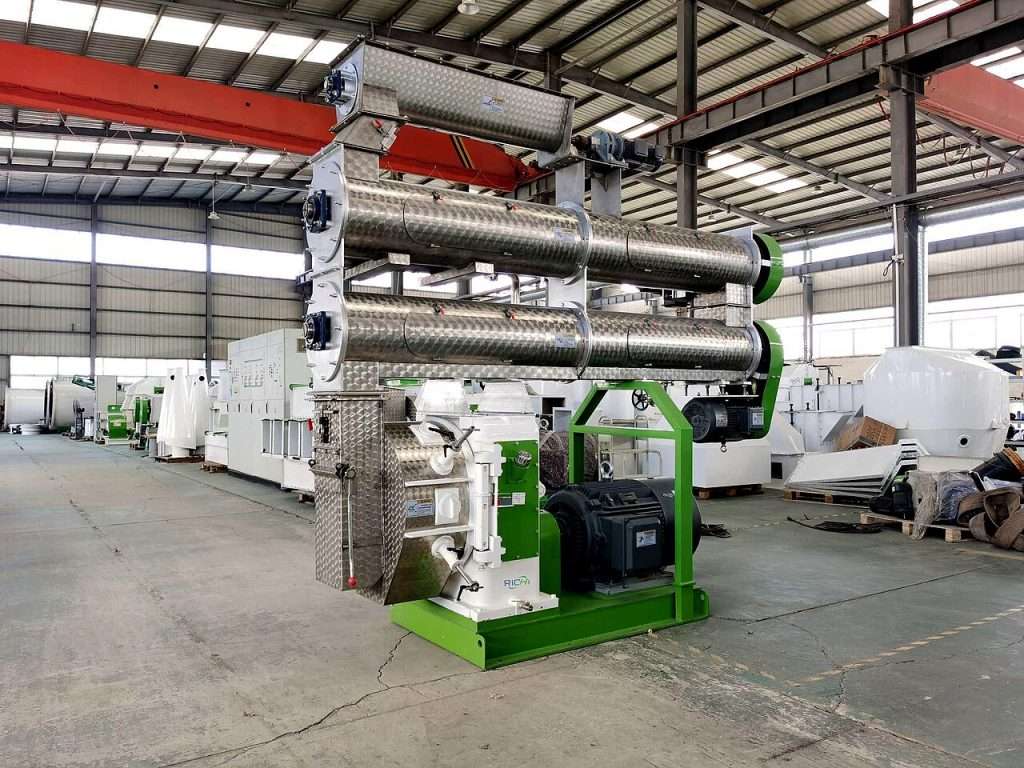
Pelleted feed improves feed conversion, reduces waste and makes storage and transport easier. Chinese manufacturers, especially in Henan, Shandong and Jiangsu, supply pellet mills and complete feed processing lines for poultry, cattle, sheep, pigs, fish and pets, as well as biomass pellet plants. From small flat-die machines for farms to multi-tonne-per-hour ring-die lines, China offers solutions at many price levels. This guide explains how to source feed pellet mills and feed lines from China.
1. Define your feed and capacity
- Animal type: poultry, ruminants, pigs, aquaculture (sinking or floating feed), pets.
- Formulation: raw materials such as corn, soybean meal, wheat bran, grass, additives, and moisture content.
- Pellet size: diameter and length for each animal and growth stage.
- Capacity: tonnes per hour and hours per day.
- Power supply: voltage and frequency, or diesel-driven machines for off-grid farms.
2. Flat die or ring die?
- Flat-die pellet mills: simple and affordable, suitable for small farms (roughly up to 1 t/h).
- Ring-die pellet mills: industrial machines with higher capacity, better pellet quality and longer die life, usually combined with a steam conditioner.
- Extruders: needed for floating fish feed and pet food.
3. Complete feed line components
- Raw material intake, cleaning and storage silos.
- Hammer mill for grinding, with screen sizes for each formula.
- Batching scales and mixer (paddle or ribbon).
- Conditioner with steam boiler.
- Pellet mill, cooler, crumbler and screener.
- Bagging scale, sewing machine and conveyors.
- Control panel or PLC for automation.
Ask for a process flow chart and layout drawing that fits your building. See also our conveyor sourcing guide and packaging machine guide.
4. Quality points to check
- Die and roller material and heat treatment; die hole compression ratio for your formula.
- Main drive: gear or belt drive, motor brand and power.
- Bearings and seals in the pelleting chamber.
- Stainless steel in conditioner and feed zones.
- Safety guards, overload protection and electrical standards.
5. Testing before shipment
- Run the pellet mill with material similar to your formula and check capacity, pellet hardness and fines.
- Check noise, vibration and bearing temperature.
- Test the mixer for uniformity and the hammer mill for particle size.
- Inspect electrical cabinets, painting and packing of spare dies and rollers.
Our factory acceptance test guide explains how to organise tests.
Frequently asked questions
Can one pellet mill make feed for different animals?
Yes, with different dies for different pellet sizes. Order spare dies and rollers for each size.
Can Chinese factories supply biomass pellet plants too?
Yes. Wood and straw pellet lines use similar technology but need machines designed for those materials.
Do you source other farm machinery?
Yes. See our guides to agricultural machinery and tractors.
Source feed machinery with Supbon Sourcing
Supbon Sourcing helps farms, feed mills and dealers compare Chinese pellet mill manufacturers, review line layouts, attend test runs and manage shipping. Learn more about our agricultural machinery sourcing service.
Planning a feed mill? Send us your capacity and feed types for a free quote.