
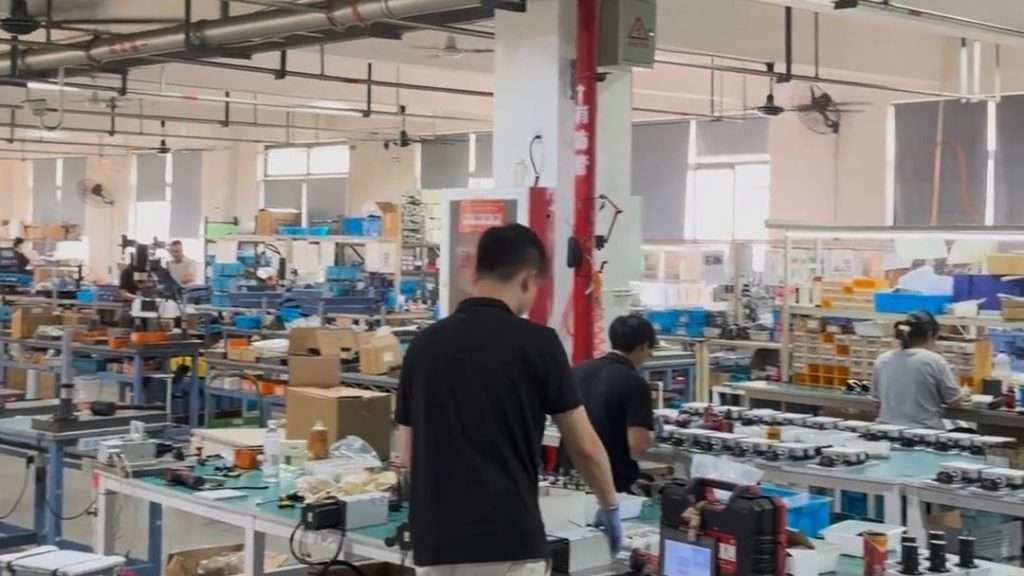
When you ask a Chinese supplier whether it can deliver your order on time, the answer is almost always yes. Whether it really can depends on its production capacity: people, equipment, space, suppliers and existing orders. On a recent visit to a tapping machine factory for a client, we spent as much time looking at the assembly line as at the machine itself. This guide explains how to evaluate a factory’s real production capacity.
1. Look at the assembly area, not the showroom
- How many assembly stations or lines are in use, and how many are idle?
- How many machines like yours are being assembled right now?
- Is the work organised, with parts sorted and labelled, and clear workstations?
- Is there a testing area, and are machines actually being tested before packing?
A tidy showroom with a near-empty workshop behind it is a warning sign.
2. Count the people and skills
- How many assembly workers, electricians, engineers and quality inspectors are there?
- Does the factory have its own design engineers, or only sales staff?
- Who will install and train at your site, and are those engineers available?
3. Understand what is made in-house and what is outsourced
Most machinery factories buy components such as motors, PLCs, bearings and often castings. That is normal. What matters is which key processes they control themselves: frame welding, machining, assembly, electrical wiring and testing. Ask which parts are outsourced and how incoming parts are checked. Outsourced processes can become bottlenecks at busy times.
4. Check stock and work in progress
- Are frames, castings and key components in stock for standard models?
- Do they keep finished machines in stock, and for which models?
- Are there long-lead items, such as special motors or imported components, that set the delivery date?
5. Ask about the order book and lead times
- How many units do they deliver per month for your model?
- What is the current lead time, and how full is the schedule?
- How do they handle peak periods, such as the weeks before Chinese New Year? See planning orders around Chinese New Year.
- Can they show recent export shipments, such as packing lists or loading photos?
6. Match capacity to your order
A small factory may be excellent for one custom machine but struggle with twenty units a month. A large factory may deliver volume, yet give a small order little attention. Choose a supplier whose capacity fits your order now and as you grow. If you depend on a single supplier, consider a second source for important products.
7. On-site visit or video audit?
An on-site visit shows the most: you can walk the floor, talk to staff and see the real pace of work. A live video audit can work for an early screening, if you control what the camera shows and ask to see specific areas. See how to verify a Chinese machinery supplier and how to plan a factory visit.
Frequently asked questions
Can I trust the capacity figures on a supplier’s website?
Treat them as marketing claims until they are confirmed on site. Ask for evidence such as production records or shipment photos.
How do I check progress after ordering?
Ask for dated photos and videos, and arrange a during-production inspection. See machinery inspection stages.
Can you visit a factory for us?
Yes. We visit factories for clients, check capacity and quality, and report back with photos and videos. See our tapping machine factory visit for an example of what we look at.
Factory visits with Supbon Sourcing
Supbon Sourcing is based in Jinan. We visit factories on behalf of buyers, assess capacity and quality, and follow orders through to shipment. Learn more about our machinery sourcing service.
Considering a new supplier? Ask us to visit the factory for you.