
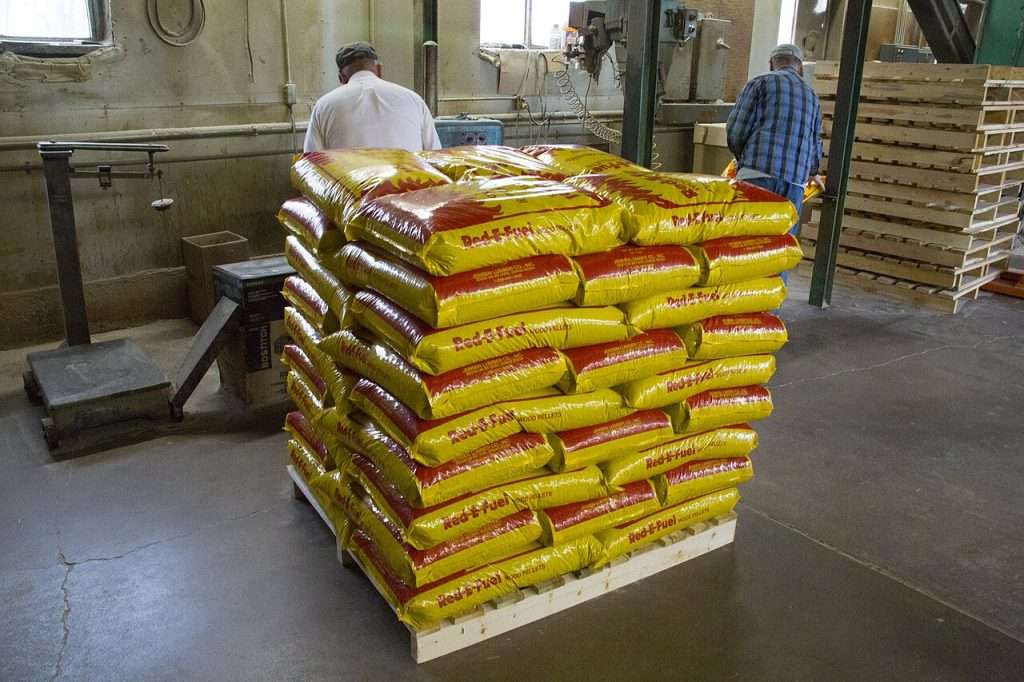
Wood and biomass pellets are used for home heating, industrial boilers and power plants, and they turn sawdust, wood waste and crop residues into a valuable fuel. Chinese manufacturers, with many in Shandong, Henan and Jiangsu, supply pellet mills and complete pellet plants for small and large projects. Wood is much harder to pelletise than animal feed, so the equipment and the process must be right. This guide explains how to source wood and biomass pellet plants from China. For animal feed, see our feed pellet mill guide.
1. Typical pellet plant process
- Size reduction: wood chippers and crushers for logs and branches.
- Drying: rotary drum or belt dryers to bring moisture to the right level for pelletising.
- Fine grinding: hammer mills that produce uniform particles.
- Conditioning: mixing and, where needed, adding steam or water.
- Pelletising: ring die pellet mills for industrial output, or flat die mills for small output.
- Cooling and screening: counterflow coolers and screens to remove fines.
- Packing: bagging for small bags or big bags, and storage silos.
2. Define your project
- Raw material: sawdust, wood chips, logs, straw, rice husk or other residues, and its moisture content.
- Output in tonnes per hour, and operating hours per day.
- Pellet diameter and quality standard required by your buyers, such as ENplus or local standards.
- Heat source for the dryer: wood, biomass burner, gas or other fuel.
- Power supply, site layout and permits.
3. Key quality points
- Ring die and rollers: material, heat treatment, compression ratio for your raw material, and expected life.
- Pellet mill drive: gearbox or belt drive, motor power and bearing quality.
- Dryer: capacity at your moisture level, temperature control and spark and fire protection.
- Hammer mill: screen size, hammers and rotor balance.
- Dust collection and fire safety: wood dust is combustible. See our dust collector guide.
- Controls: PLC automation and interlocks along the line.
4. Test before you pay
- Send your raw material to the factory and ask for a pelletising test.
- Check pellet hardness, durability, length, fines and moisture.
- Measure real output and energy use.
- Check machine brands, die and roller materials, and the electrical cabinet.
See our factory acceptance test guide.
5. Running costs, installation and spares
Dies and rollers wear and are a major running cost, so ask for their price and lifetime and order spares. Complete plants need engineers for installation and start-up. See warranty and after-sales service, spare parts sourcing and shipping machinery from China.
Frequently asked questions
Can I use straw or crop residues?
Yes, but they behave differently from wood and may need different dies and pre-processing. Always test your material.
Flat die or ring die?
Flat die mills suit small, intermittent production. Ring die mills suit continuous industrial production.
Do you source boilers that burn pellets?
Yes. See industrial steam boiler sourcing.
Source pellet plants with Supbon Sourcing
Supbon Sourcing is based in Shandong. We help buyers compare pellet plant manufacturers, arrange material tests, inspect machines and manage shipping. Learn more about our machinery sourcing service.
Planning a pellet plant? Send us your raw material and capacity for a quote.