
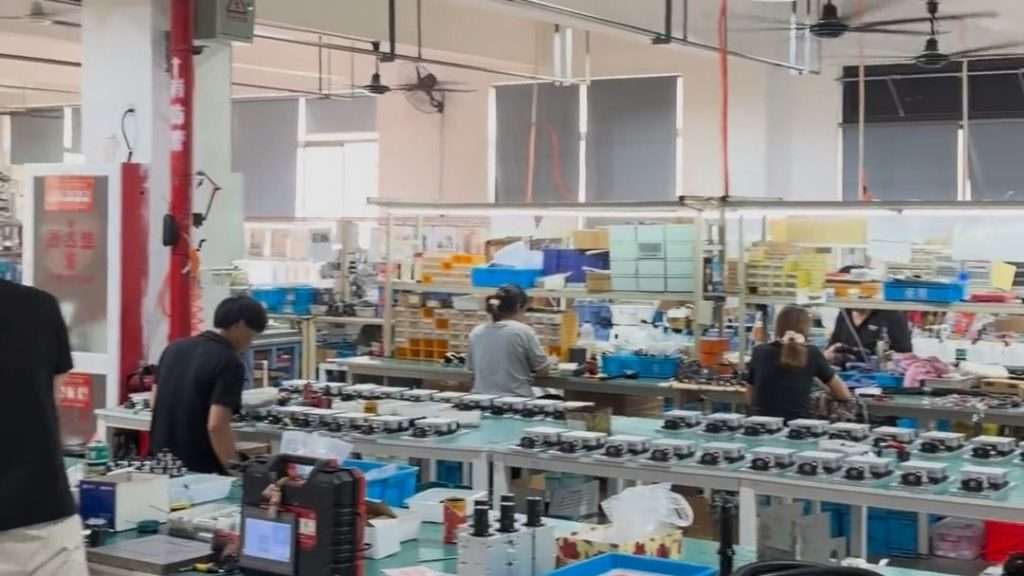
Many machinery distributors and dealers now sell machines made in China under their own brand. Done well, a private label range gives you better margins, control of your market and a brand customers remember. Done badly, it leaves you with warranty claims for a machine you cannot fix and a brand linked to poor quality. This guide explains how to source OEM and private label machinery from China.
1. Choose the right products
- Start with machines your customers already buy, that you understand and can service.
- Prefer products with steady demand and standard specifications over highly custom machines.
- Think about parts and service from day one: can your team repair it?
- Check competition and price levels in your market.
2. Choose the right factory
- Look for factories with export experience and existing OEM customers in other markets.
- Check that they manufacture the product themselves and have stable quality. See how to evaluate a factory’s production capacity.
- Find out their minimum order quantity (MOQ) for custom colours, logos and panels.
- Assess their willingness to support you with documents, parts and technical help.
See how to find reliable machinery manufacturers in China.
3. Control the specification
With a private label product, quality problems carry your name. Freeze a specification with the factory, including frame materials, component brands, software version, accessories and packaging. Approve a golden sample and keep it as a reference. Require written approval for any change. See 12 clauses for a machinery purchase contract.
4. Branding and documentation
- Colour scheme, logo, nameplates, decals and control panel design.
- Manuals, parts books and labels in your language, with your contact details.
- Packaging and shipping marks.
- Compliance documents where needed. Under some rules, the company that puts its brand on a machine takes on the manufacturer’s legal responsibilities. See CE marking for machinery from China.
5. Protect your brand
- Register your trademark in your markets, and consider registering it in China too.
- Agree in writing that the factory will not use your brand, designs or customer information for others.
- Keep custom designs and moulds in your ownership where possible.
6. Parts, warranty and quality control
- Agree on parts prices, stock and delivery times, and hold a parts stock locally.
- Agree on warranty terms between you and the factory, so that you are not paying for its defects.
- Inspect every batch before shipment, and keep records of problems to discuss with the factory. See machinery inspection stages and warranty and after-sales service.
Frequently asked questions
What MOQ should I expect?
It depends on the machine. Changing colours and logos often has a lower MOQ than changing the design. Ask each factory and compare.
Can I mix several products in one order?
Yes. Many distributors buy a range from several factories and consolidate it. See consolidating shipments.
Should I start with a trial order?
Yes. A small first order lets you test quality, customer response and the factory’s support before you commit.
Build your range with Supbon Sourcing
Supbon Sourcing helps distributors find OEM factories, set specifications, check branding and documents, and inspect every batch. Learn more about our machinery sourcing service and custom equipment sourcing.
Planning your own machinery brand? Tell us about your market and products.