
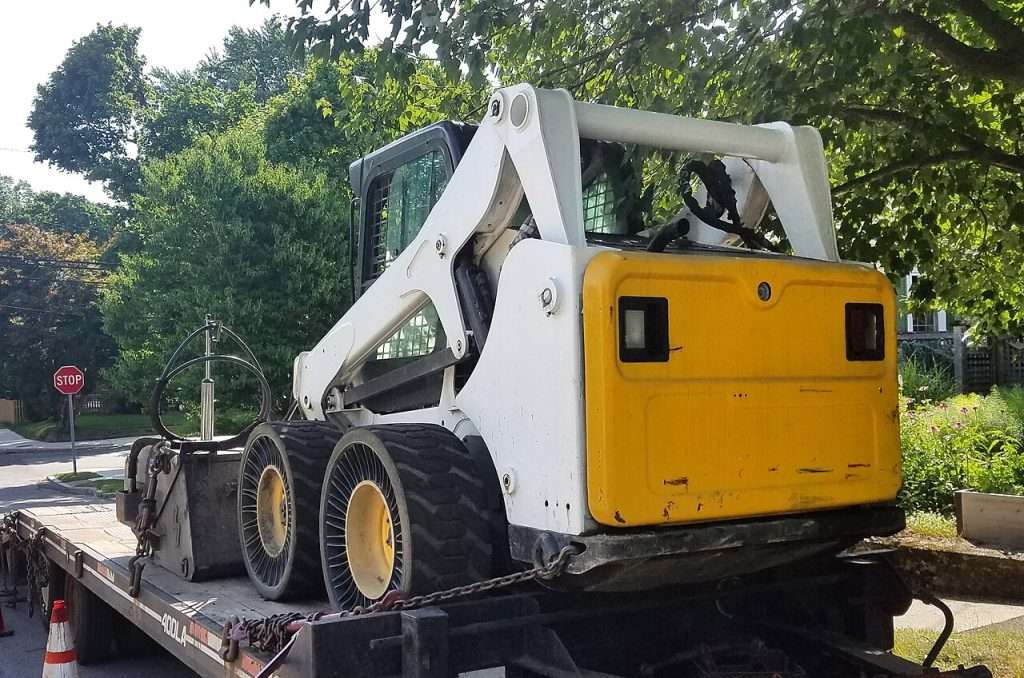
Skid steer loaders are popular with rental fleets, contractors, farms and landscapers because one compact machine can take on many jobs when fitted with the right attachment. Chinese manufacturers now offer wheeled and tracked models across a broad size range, including electric versions, which makes them attractive to dealers and importers. Quality and compliance vary considerably, however, especially on engines, hydraulics and operator protection. This guide explains how to compare machines and avoid common mistakes. For the wider equipment market, read our construction machinery sourcing guide.
Types of skid steer loaders
- Wheeled skid steers: suited to hard surfaces, and usually quicker and lower in tyre cost than tracks.
- Compact track loaders: better flotation and traction on soft ground, with higher undercarriage maintenance.
- Radial lift: the bucket follows an arc, which suits digging and work at lower heights.
- Vertical lift: a straighter lift path that suits loading trucks and handling pallets.
- Mini or stand-on loaders: very compact machines for tight sites and landscaping.
- Electric models: useful indoors or in noise-sensitive areas. Check battery chemistry, charging and runtime.
What to specify in your inquiry
- Rated operating capacity and tipping load. Rated capacity is commonly set at about half of tipping load on wheeled machines and a lower share on tracked machines, so ask how the supplier states it.
- Engine brand, power and emissions stage required in your market.
- Auxiliary hydraulic flow and pressure, and whether you need a high-flow option.
- Lift height, reach, overall width and operating weight.
- Drive and controls: mechanical levers, pilot joysticks or electro-hydraulic controls.
- Cab type: open canopy or enclosed, with heater or air conditioning.
- Tyre or track specification, and your working conditions and climate.
- Attachments required, such as buckets, forks, augers, trenchers or sweepers.
Key quality points
- Hydraulic components: ask for the make of drive pumps, drive motors and valves. These are the largest cost and reliability items.
- Chain case and final drive: check chain sizing, oil bath design and access for service.
- Boom and frame welds: inspect weld quality at pivot points and lift arms.
- Pins and bushings: confirm hardness and greasing points.
- Cooling system: radiator capacity and debris resistance matter in hot or dusty conditions.
- Attachment coupler: confirm compatibility with the universal quick-attach style if you plan to use attachments from other sources.
- Dealer support: importers should ask about parts books, service manuals, diagnostic tools and training. Our guide to excavator and machinery attachments covers related hardware checks.
Safety and compliance
- Roll-over and falling-object protection is essential. Ask for ROPS and FOPS certificates, normally tested to ISO 3471 and ISO 3449, from a recognised body.
- Check seat bar or restraint interlocks, which should stop lift and drive functions when the operator leaves the seat.
- Non-road engine emissions are regulated in many markets, such as EU Stage V and US EPA Tier 4. Confirm the engine certificate matches the destination.
- Machines entering the EU generally need CE marking, including noise labelling.
- Road use, if any, is subject to separate national rules.
Testing before shipment
Run each machine, or an agreed sample, through a documented factory acceptance test. Useful checks include:
- Cold start, engine running behaviour and any warning lights.
- Hydraulic pressure and auxiliary flow compared with the data sheet.
- Lift and tilt cycle times, and holding the load without drift.
- Straight-line travel and turning under load.
- Oil leaks at hoses, fittings, motors and cylinders after a working period.
- Function of interlocks, lights, alarms and quick coupler.
- Serial numbers for machine and engine compared with certificates.
Shipping and spare parts
- Compact machines are often loaded in containers, and sometimes with attachments alongside. Agree the lashing plan and read our guide to shipping machinery from China.
- Protect cabs, exposed cylinders and connectors from salt air.
- Ask about battery disconnect and transport rules on electric models, as lithium batteries can be classed as dangerous goods.
- Order filters, seals, tracks or tyres, teeth and common hydraulic parts with the first batch.
- Dealers should agree parts availability in writing. See our warranty and after-sales guide.
- Lead times are typically shorter for standard models than custom builds, but confirm with the supplier.
Before confirming a large order, consider buying one or two sample units and running them in your own market conditions. A short field trial can reveal issues with cooling, tyre choice or controls that a factory test will not show, and it gives your service team time to learn the machine.
Frequently asked questions
Should I choose wheels or tracks?
Wheels generally suit paved surfaces, yards and quick movement. Tracks generally suit mud, sand and slopes where traction and low ground pressure are important. Many buyers decide based on where the machine will spend most of its hours.
Can I put my own brand on the machines?
Many factories offer private-label colours and decals. Certificates and manuals must still correctly identify the manufacturer and model, so check how this works for your market. Our OEM and private-label guide explains more.
Do skid steers need to be tested with attachments?
If attachments are part of your order, it is sensible to test them on the machine before shipment, especially hydraulically powered ones, to confirm fit and flow.
Source Skid Steer Loaders with Supbon Sourcing
Supbon Sourcing is a machinery sourcing agent based in Jinan, in Shandong, a province known for its construction machinery industry. Our construction machinery sourcing service can help you compare suppliers and specifications, follow production and arrange inspection. Buyers building a compact equipment range may also want to see our guides to wheel loaders and telehandlers.
Contact Supbon Sourcing with your required capacity, market and attachments to discuss your order.