
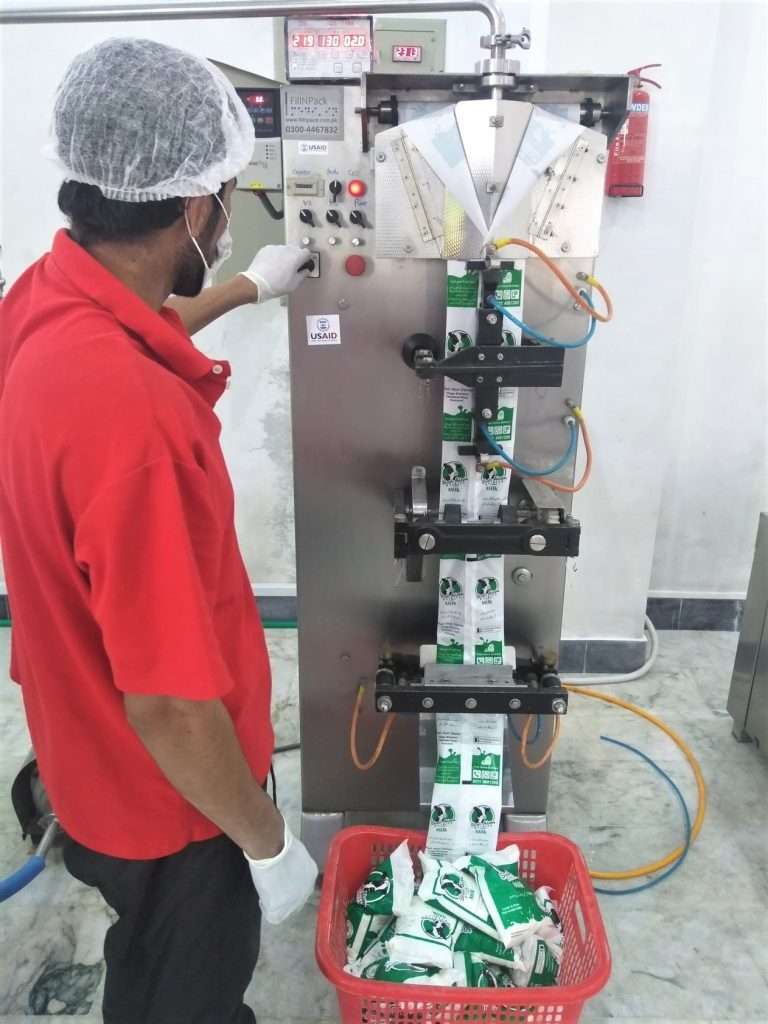
Short answer: choose a vertical form fill seal (VFFS) machine when you pack one or a few products at high speed into simple pillow, gusset or block-bottom bags made from roll film, and unit packaging cost matters most. Choose a premade pouch (rotary or horizontal “given bag”) machine when you sell into retail with stand-up, zipper or spouted pouches, change SKUs often, and need a premium shelf look. Many buyers end up deciding on film cost, required speed and bag style, in that order.
Both machine types are made in large numbers in China, and quotations can look very similar on paper. The real differences show up in the dosing system, the film or pouch handling, sealing quality and how easy changeovers are. This guide explains how to choose between them, which specifications to compare, what usually goes wrong with Chinese suppliers, and what to test before the machine leaves the factory. For a broader overview of packaging equipment, see our packaging machine buyer’s guide.
How the two machine types work
A VFFS machine pulls flat film from a roll over a forming collar, wraps it around a tube, makes a vertical (back) seal, then fills product down the tube and makes the horizontal seals that close one bag and form the bottom of the next. The bag is made on the machine, so packaging material is bought as roll film, which is usually the cheapest form of flexible packaging per bag.
A premade pouch machine takes bags that were already made by a pouch converter. A bag magazine feeds pouches to grippers; the machine opens the pouch (often by suction and air), may print a date code, fills, optionally vacuums or flushes with nitrogen, and seals the top. Rotary versions typically have 6 or 8 stations around a turret; horizontal (linear) versions move pouches in a line and are common for larger bags or dual-lane designs.
VFFS vs premade pouch: comparison table
| Factor | VFFS (roll film) | Premade pouch machine |
|---|---|---|
| Typical bag styles | Pillow, gusset, quad seal, block bottom (on special models), stick packs (multi-lane) | Stand-up, zipper, flat-bottom, spouted, shaped, paper-laminate pouches |
| Typical speed (single lane) | Often around 30–80 bags/min for intermittent motion; continuous motion models can go higher | Often around 20–60 pouches/min depending on stations, bag size and product |
| Packaging material cost | Lower (roll film) | Higher (converted pouches) |
| Machine price | Usually lower for basic models, rises with servo drives and multihead weighers | Usually higher for the same output level |
| Changeover between bag sizes | Forming tube/collar change, film width change; can take longer | Gripper width adjustment, often faster on good designs |
| Shelf appearance | Functional; good for bulk, food service, secondary packing | Premium retail look, reclosable options |
| Operator skill needed | Film tracking, registration and seal settings need experience | Pouch quality and magazine feeding are critical |
| Footprint | Tall, compact floor area; dosing unit sits on top | Wider floor area; dosing unit beside or above turret |
The speed figures above are general ranges seen in supplier catalogues, not guarantees. Real output depends on product flow, bag length, fill weight and seal time, so always ask the supplier to confirm speed for your product and bag size.
How to choose: five questions to answer first
1. What bag does your market expect?
If your customers buy coffee, pet treats, nuts or snacks on a supermarket shelf, a stand-up zipper pouch may be a commercial requirement, not a choice. If you supply restaurants, distributors or industrial users, a pillow or gusset bag from a VFFS is usually fine and cheaper.
2. How many SKUs and how often do you change?
A plant that runs one rice or sugar product all day benefits from VFFS economics. A contract packer running ten SKUs in small batches often prefers premade pouches because changeover is quicker and pouch stock can be printed per SKU without film registration issues.
3. What is the product and dosing method?
The dosing system matters as much as the bagger. Match it to the product:
- Granules and snacks (chips, nuts, candy, frozen food): multihead weigher.
- Free-flowing small granules (sugar, salt, rice, seeds): volumetric cup filler or linear weigher.
- Powders (flour, milk powder, spice, protein): auger filler, sometimes with dust extraction. See also our guide to spice and powder processing machinery.
- Liquids and pastes (sauces, honey, oil): piston or pump filler; premade spouted pouches are common here.
4. What output do you really need?
Calculate from your daily volume, shifts and a realistic efficiency (many lines run well below catalogue speed once changeovers, film splices and breaks are included). Buying a much faster machine than needed adds cost and complexity without benefit.
5. What is the total packaging cost over several years?
Compare machine price plus several years of packaging material. For high volumes, the lower cost of roll film can outweigh the price difference between machines. For low volumes with premium pricing, the pouch cost per unit is often less important than the look and convenience of the pack.
Specifications that matter in the quotation
- Bag size range: width and length for VFFS (set by forming tube and film width), or pouch width and height range for premade pouch machines. Make sure your largest and smallest bags are inside the range, not at its limit.
- Fill weight range and accuracy: ask for the stated accuracy at your fill weight (for example, a tolerance in grams or percent) and how it was measured.
- Drive system: pneumatic vs servo pull belts and sealing jaws on VFFS; mechanical cam vs servo indexing on rotary machines. Servo designs are usually easier to adjust and more repeatable.
- Sealing type: constant heat or impulse sealing, jaw pattern, and suitability for your film structure (PE, laminated PET/PE, paper laminates, recyclable mono-material films can be harder to seal).
- Options: date coder (thermal transfer or inkjet), nitrogen flushing, degassing valve applicator for coffee, zipper opening, hole punch, gusset device, anti-static or dust hood.
- Contact parts: stainless steel grade (304 or 316 for salty or acidic products), food-grade plastics, and easy-to-clean design.
- Electrical and controls: PLC and HMI brand, language, voltage and frequency for your country. Read our note on voltage, frequency and electrical specifications before confirming.
- Air consumption: compressed air pressure and volume required, so you can size your compressor.
Putting all of this into a clear RFQ makes quotes comparable. Our guide on how to write a machinery RFQ shows the structure.
Common mistakes and red flags with Chinese suppliers
- Quoting the bagger without the right doser. A low price may exclude the weigher, auger filler, elevator or platform. Ask for a complete line drawing and a list of every unit included.
- Catalogue speed without product. Speed shown in videos is often with an empty bag or an easy product. Ask for a video or trial with your product or a close substitute.
- Vague accuracy claims. “High accuracy” means nothing. Ask for a number at your target weight.
- No film or pouch specification. Many sealing problems come from mismatched film and jaw temperature. Send your film structure or samples so the supplier can test.
- Generic component claims. If the quotation lists well-known brands for PLC, servo or pneumatics, confirm the model numbers and check them at inspection. Substitution happens.
- Trading companies posing as factories. This is not always a problem, but you should know who builds the machine and who will support it. See how to verify a Chinese machinery supplier.
- Unclear spare parts and wear parts. Sealing jaws, heating elements, cutting knives, Teflon tape, gripper fingers and suction cups wear. Ask for a priced wear-part list.
Pre-shipment test checklist
Ideally, run a factory acceptance test with your own film or pouches and real product. Our factory acceptance test guide explains how to organise it. At minimum, check the following:
| Check | What to look for | Applies to |
|---|---|---|
| Continuous run | Run at least 20–30 minutes at the agreed speed without stops | Both |
| Weight accuracy | Weigh a sample of bags (for example 30–50) and calculate the spread against target | Both |
| Seal integrity | Squeeze test, water or vacuum leak test, peel strength by hand; no wrinkles or product in the seal | Both |
| Film tracking and registration | Print mark stays centred; cut position stable after film splice | VFFS |
| Pouch pick and open rate | Count missed or badly opened pouches; check “no bag, no fill” and “no open, no fill” functions | Premade pouch |
| Changeover | Time a size change and check that settings are saved as recipes | Both |
| Date coding | Clear print, correct position, no smearing | Both |
| Safety | Guards, interlocked doors, emergency stops work; warning labels in English | Both |
| Components | PLC, servo, pneumatic and electrical brands match the contract | Both |
| Documents | Manual, electrical diagrams, parts list, and any agreed certificates | Both |
If you also need a checkweigher or metal detector after the bagger, test the full line together. See our guide to food metal detectors and checkweighers.
Shipping, installation and spare parts
Packaging machines are usually shipped in wooden cases or on fumigation-free plywood pallets, with the weigher and platform packed separately. Ask for moisture protection and fixing of the jaws, turret and grippers so they cannot move in transit. A single VFFS with multihead weigher often fits in part of a container; a full line with conveyors and checkweigher may need more space, so ask for packing dimensions early.
Installation is often simple for a single machine, and many suppliers support it by video call. For a complete line, or when your team has no packaging-machine experience, consider asking for an engineer visit and agree the cost (travel, daily fee) in the contract. Order a starter kit of wear parts with the machine: sealing jaws or heating elements, cutting knives, Teflon tape, fuses, sensors, suction cups and gripper fingers. More on this in our article on machinery spare parts from China.
Frequently asked questions
Is a VFFS machine always cheaper to run than a premade pouch machine?
Packaging material cost per bag is usually lower with roll film. But if you need stand-up zipper pouches for retail, a VFFS may not produce the bag style you need, so the comparison only makes sense for bag styles both machines can make.
Can one machine make both pillow bags and stand-up pouches?
Generally not in a practical way. Some VFFS models make block-bottom or doypack-style bags from film, but they are more complex and the bag differs from a premade zipper pouch. Most buyers choose one type per line.
What information should I send to get an accurate quotation?
Product type and photos, bulk density, fill weight, bag style and size, film or pouch structure, target output per minute, voltage and frequency, and any options such as nitrogen flushing or date coding.
How long does it take to build a packaging machine in China?
Standard models are often built in several weeks, while customised lines can take longer. Lead times vary by factory workload and season, so confirm the schedule in the contract.
Do I need my own film or pouches for testing?
It is strongly recommended. Sealing settings depend on the material, and a test with the supplier’s stock film may hide problems you will see later with your own packaging.
Source packaging machines with Supbon Sourcing
Supbon Sourcing is based in Jinan, Shandong, and helps overseas buyers compare VFFS and premade pouch machine suppliers, check that quotations include the right dosing equipment, and test machines with real product before shipment. See our packaging machinery sourcing service and sourcing agent fees, or contact us with your product, bag style and target output.