
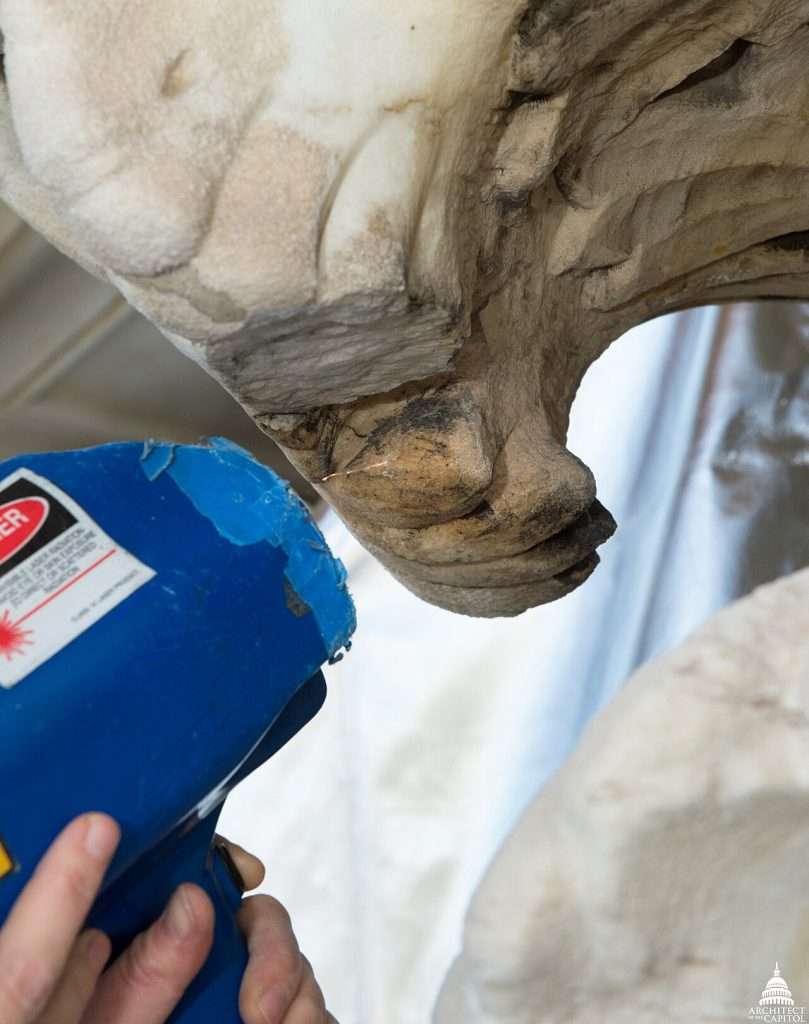
Laser cleaning and laser marking are two of the fastest-growing laser applications. Laser cleaning removes rust, paint, oil and oxide without chemicals or blasting media, while laser marking adds permanent serial numbers, logos, QR codes and graphics to metals and plastics. Jinan’s laser industry produces both types of machine in large numbers, often alongside handheld laser welders. This guide explains how to choose and source laser cleaning and marking machines from Jinan.
Part 1: Laser cleaning machines
Pulsed or continuous?
- Pulsed fibre lasers (for example 100 to 500 W) clean delicate surfaces with minimal heat effect. They suit moulds, precision parts, heritage restoration and thin coatings, but cost more per watt.
- Continuous (CW) fibre lasers (for example 1,000 to 3,000 W) remove heavy rust and thick paint quickly at a lower cost, but heat the surface more and are less suitable for delicate parts.
What to check
- Laser source brand and type, and actual output power.
- Cleaning head: scan width, weight, ergonomics and protective lens replacement.
- Cooling (air or water) and duty cycle for long working hours.
- Cable length and portability (trolley or backpack designs).
- Fume extraction during cleaning, since removed coatings can be hazardous.
Many Jinan factories offer 3-in-1 machines that combine laser welding, cleaning and cutting. See our laser welding machine guide.
Part 2: Laser marking machines
Choose the laser type by material
- Fibre lasers: metals and many plastics; most common for serial numbers and part marking. MOPA fibre lasers allow colour marking on stainless steel and better results on some plastics.
- CO2 lasers: wood, leather, paper, glass, acrylic and packaging.
- UV lasers: fine marking on sensitive plastics, glass and electronics with minimal heat.
Configurations
- Desktop, split (portable) and handheld markers.
- Enclosed Class 1 cabinets for safer operation.
- Rotary attachments for round parts.
- Online flying markers for production lines and conveyors, with vision or barcode integration.
Software
Check that the marking software supports your file formats, serial numbers, date codes, barcodes and QR codes, and can connect to your database or PLC if needed.
Laser safety and compliance
Open-beam laser systems require laser safety glasses, controlled working areas and trained operators. For Europe and other markets, ask for CE documentation and laser class labelling. Consider enclosed designs where operators are untrained or the public may be present.
Testing before shipment
- Send your samples: rusty parts, painted parts or the items you need to mark.
- Check cleaning speed and surface result, or marking quality, depth and speed.
- Verify the laser source brand, nameplate power and accessories.
- Check the protective lenses, spare parts and packing.
Frequently asked questions
Is laser cleaning cheaper than sandblasting?
The machine costs more up front, but there are no blasting media, less waste and less masking, which can make it cheaper over time for suitable applications.
Can I order small quantities?
Yes. Laser markers and cleaners are often bought one or a few at a time and can be shipped by air or with other machines.
Why buy from Jinan?
Jinan has one of China’s densest laser equipment clusters. See our Jinan machinery industry guide.
Source laser equipment with Supbon Sourcing
Supbon Sourcing is based in Jinan. We compare laser cleaning and marking machine suppliers, test your samples at the factory and inspect machines before shipment. Learn more about our machinery sourcing service.
Have samples to test? Contact us to arrange a sample test.