
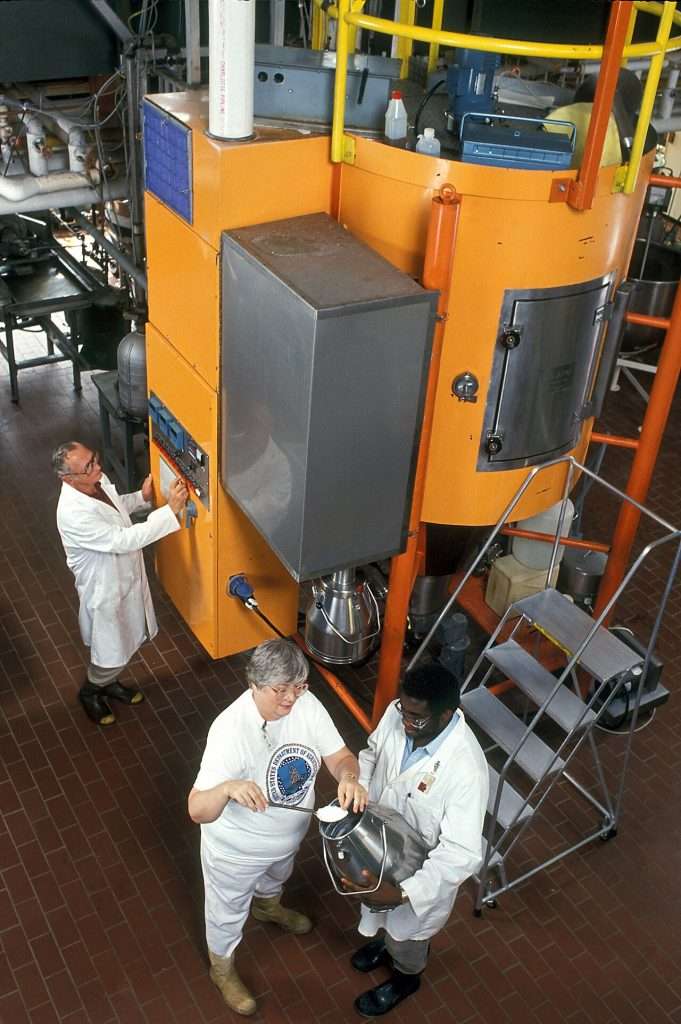
Dry pet food, from dog and cat kibble to fish feed and treats, is usually made by extrusion. Ground ingredients are mixed, conditioned with steam and water, cooked under pressure inside an extruder and then cut, dried, coated and cooled. Chinese manufacturers supply everything from small single screw extruders for start-ups to automated multi-ton-per-hour lines. Because a pet food line combines grinding, thermal processing, drying and coating, careful specification matters more than the extruder price alone. This guide explains how to source a pet food extruder and production line from China.
Main parts of a pet food production line
- Raw material handling: intake, batching scales and conveyors for grains, meat meals, proteins and minerals.
- Grinding: hammer mills or fine pulverizers. Fine, even grinding helps extrusion quality and kibble appearance.
- Mixing: paddle or ribbon mixers for dry ingredients, with liquid addition where needed.
- Preconditioner: adds steam and water so the mash is partially cooked before it enters the extruder.
- Extruder: single screw or twin screw, with a die and cutter that shape and size the kibble.
- Dryer: multi-layer belt dryers that bring moisture down to a stable level for storage.
- Coating: drum coaters or vacuum coaters that add fat, oil and palatants.
- Cooling and packing: counterflow coolers, screens, weighers and bagging machines.
Single screw or twin screw extruder?
- Single screw: lower cost and simpler to run. Suitable for many standard dry kibble and floating fish feed recipes.
- Twin screw: better mixing and more control, and it handles higher levels of fresh meat, fat or difficult recipes. Higher price and more complex maintenance.
- Ask the supplier to recommend a model based on your actual recipes, not just your capacity target.
What to specify before requesting quotes
- Products: dog food, cat food, fish feed, treats or a mix. Give shapes, sizes and target bulk density.
- Recipes: main ingredients, fat level and any fresh meat or slurry addition.
- Capacity: kilograms or tons per hour of finished product, and planned shifts per day.
- Steam supply: most lines need a steam boiler for the preconditioner and sometimes the dryer. See our industrial steam boiler guide.
- Dryer heating: steam, electric, gas or diesel, depending on your local energy costs.
- Electrical supply: voltage, frequency and phase, and any brand requirements for PLC, inverters and switchgear.
- Building: floor space and height. Dryers and coolers can be tall, and some lines are designed on several levels.
Key quality points
- Screw and barrel material: ask for material and hardness details. These are wear parts, so replacement cost and availability matter.
- Food-contact surfaces: stainless steel where the product touches the machine, especially after cooking.
- Control system: how temperature, moisture and feed rate are controlled. A good PLC/HMI system makes product consistency easier.
- Dryer design: even airflow and temperature across the belt prevent wet spots that can lead to mold.
- Coating accuracy: how fat and palatant dosing is measured and controlled.
- Component brands: motors, gearboxes, bearings and inverters should be named in the quotation.
Pet food lines share many components with animal feed plants. If you also produce livestock feed, see our feed pellet mill sourcing guide.
Safety and compliance
- Guarding on cutters, conveyors and rotating parts, plus emergency stops along the line.
- Pressure equipment such as boilers and steam lines must meet local rules.
- Dust control around grinding and mixing areas.
- Pet food plant hygiene and registration requirements vary by country. Check what your authorities require for equipment design and documentation before you order.
Testing before shipment
- Ask for a trial run with your own recipe, or the closest available, at the supplier’s test facility.
- Check kibble shape, size, expansion, density and moisture after drying.
- Run the extruder long enough to see stable operation, not just a short start-up.
- Verify the full scope of supply against the contract, including conveyors, cyclones, platforms and control cabinets.
Our factory acceptance test guide explains how to organize these checks.
Shipping and spare parts
- Complete lines usually need several containers. Dryers are often split into sections for transport.
- Request a detailed packing list that matches the equipment list, to make installation easier.
- Order key wear parts: screws, barrel liners, dies, cutter blades, hammer mill beaters and screens, bearings and dryer belts.
- Agree on installation, commissioning and recipe training support before you pay the final balance.
For logistics, see our guide to shipping machinery from China. For bagging, see our packaging machine guide.
Frequently asked questions
Can one extruder make both dog food and fish feed?
Often yes, by changing dies, screw configuration and settings. Floating and sinking fish feed may need different conditions. Tell the supplier every product you plan to make.
Do I need a twin screw extruder?
Not always. Many standard dry recipes run well on single screw machines. Twin screw extruders make more sense for high-meat, high-fat or special products.
How long does a pet food line take to build?
It depends on line size, customization and the factory’s order book. Larger lines with custom dryers and automation take longer. Confirm the production schedule with the supplier in writing.
Source a pet food extruder line with Supbon Sourcing
Supbon Sourcing is a China machinery sourcing agent based in Jinan, Shandong. We help buyers find suitable pet food and feed extrusion manufacturers, compare quotations, review technical details and organize inspection and shipping. Learn more about our food processing machinery sourcing service.
Contact Supbon Sourcing with your products, recipes and capacity, and we will help you plan your pet food production line.