
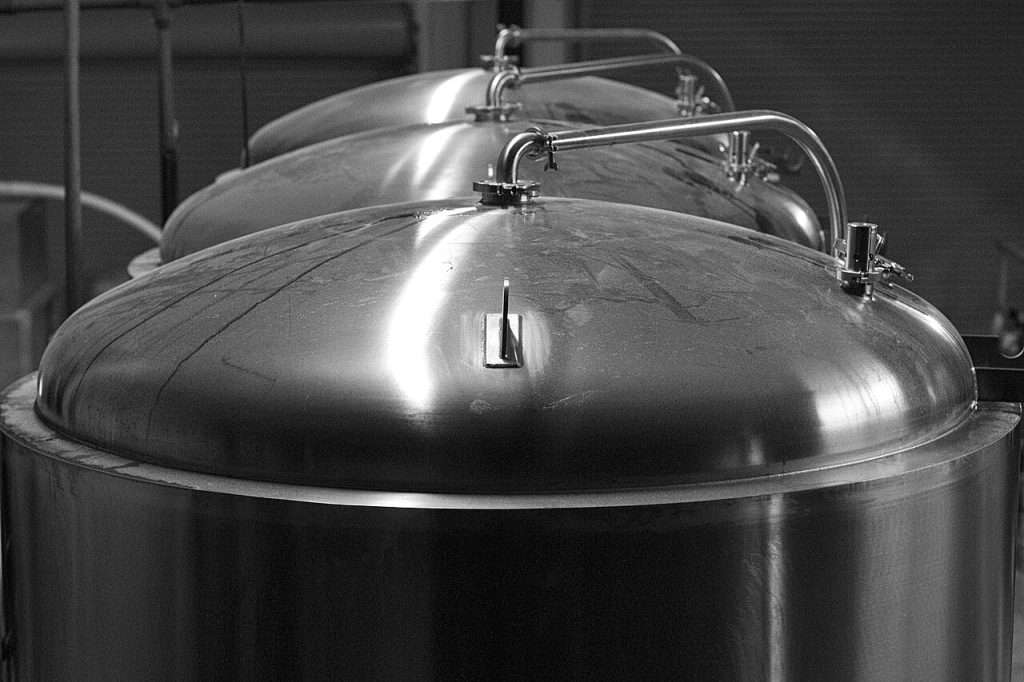
Craft breweries, brewpubs and regional beer producers around the world buy stainless steel brewing systems from China. Chinese fabricators build everything from small pilot systems to multi-vessel production brewhouses with cellar tanks, and Shandong province – including the Jinan area – is home to a number of brewery equipment manufacturers. Quality varies widely, though, and a brewery is a long-term investment where weld quality, tank finish and control design matter every brewing day. This guide explains what a brewing system includes, what to specify and how to check it before shipment.
Main equipment in a brewery system
- Malt handling: malt mill, grist case and auger or flex conveyor.
- Brewhouse: mash tun, lauter tun, brew kettle and whirlpool, combined in two, three, four or more vessels depending on how many brews per day you plan.
- Hot and cold liquor tanks: for brewing water and for chilled water used in wort cooling.
- Wort cooling: plate heat exchanger and aeration assembly.
- Fermentation and conditioning: jacketed cylindro-conical fermenters (unitanks) and bright beer tanks.
- Glycol cooling system: chiller, glycol tank, pumps and piping to tank jackets.
- CIP system: cleaning-in-place tanks and pump for caustic, acid and sanitiser cycles.
- Control system: from simple push-button panels with temperature controllers to PLC and touchscreen automation.
- Packaging: keg washers and fillers, bottle or can fillers, and labelling equipment.
Supporting utilities are often quoted separately. See our guides to industrial chillers, steam boilers, water treatment equipment and filling and bottling lines.
What to specify in your inquiry
- Batch size: brewhouse volume in litres, hectolitres or barrels – and state which barrel (US or UK) to avoid confusion.
- Brews per day and annual output: this determines the number of brewhouse vessels and fermenters.
- Heating method: steam, electric or direct fire. Steam is common on larger systems; electric suits smaller ones where power supply allows.
- Tank list: number and size of fermenters and bright tanks, including double-size tanks if you plan double batches.
- Material and finish: stainless steel grade, inner surface finish, insulation thickness and outer cladding finish.
- Pressure requirements: design and working pressure of fermenters and bright tanks, and the pressure vessel rules that apply in your country.
- Automation level: manual valves, semi-automatic or fully automated with pneumatic valves.
- Site data: ceiling height, door size, floor plan, and electrical supply (voltage, frequency, phase).
- Fittings standard: tri-clamp or DIN, and pipe sizes that match parts available locally.
Key quality points to check
- Welding and polishing: internal welds should be ground smooth and polished, with no pits or crevices that can harbour bacteria.
- Passivation: ask how tanks are pickled and passivated after welding.
- Cooling jackets: dimple jacket coverage, test pressure and placement on the cone and cylinder.
- Insulation: polyurethane foam thickness and whether it fully fills the space between shells.
- Lauter tun details: false bottom construction, rake design and variable-speed drive.
- Valves, pumps and instruments: brands and origin of sanitary valves, pumps, pressure relief valves, temperature sensors and the PLC.
- Manways and seals: good-quality gaskets and well-fitted doors prevent leaks under pressure.
Safety and compliance
- Pressure equipment rules: many markets regulate pressure vessels – for example PED in the EU or ASME-related requirements in parts of North America. Confirm what applies to your tanks before ordering, because certification cannot easily be added afterwards.
- Pressure and vacuum relief: every closed tank needs correctly sized relief valves.
- Electrical compliance: control panels may need CE, UL-type or other local approval; discuss this at quotation stage.
- Operator safety: platforms with handrails, guarded rakes and agitators, and interlocks on manways where appropriate.
- Steam and hot surfaces: insulation and safe venting of kettle vapour.
Testing before shipment
A brewing system should be inspected at the factory once assembled. A factory acceptance test typically covers:
- Dimensional check against approved drawings, including overall height for your building.
- Hydrostatic or pneumatic pressure tests on tanks and jackets, witnessed and recorded.
- Inspection of internal surfaces and welds with good lighting.
- Water run of the brewhouse: pumps, valves, rakes, heating and control functions.
- Verification of component brands against the contract list.
- Check of nameplates, documentation and material certificates.
Shipping and spare parts
- Tanks are usually shipped lying down in containers on steel frames; tall or wide tanks may need open-top or flat-rack containers.
- Ports, manways and sight glasses should be protected, and tanks secured against movement.
- Order spare gaskets, valve seals, pump seals, sensors and a few spare valves with the system.
- Clarify who supplies interconnecting pipework and whether installation supervision is offered. Our guide to installation and commissioning with Chinese suppliers explains the options.
For freight planning, see shipping machinery from China.
Frequently asked questions
How long does it take to build a brewery system?
It depends on size and customisation. Small standard systems are often completed in a couple of months, while larger automated breweries typically take longer. Drawing approval also takes time, so confirm the schedule with the supplier.
Are Chinese brewing tanks suitable for regulated markets?
They can be, provided the manufacturer builds and documents the tanks to the standard your market requires. Raise pressure vessel and electrical requirements at the very start and ask for evidence of previous compliant projects.
Should I choose steam or electric heating?
Electric heating is simple and popular for small brewhouses. Steam gives faster, more even heating on larger systems but needs a boiler. Your local energy costs and available power supply usually decide the matter.
Source brewing equipment with Supbon Sourcing
Supbon Sourcing is based in Jinan, Shandong, close to many stainless steel tank and brewery equipment manufacturers. We help overseas buyers shortlist suppliers, review drawings and quotations, follow production and arrange inspection before shipment as part of our food and beverage machinery sourcing service. Share your batch size, tank list and site details, and contact us to get started.