
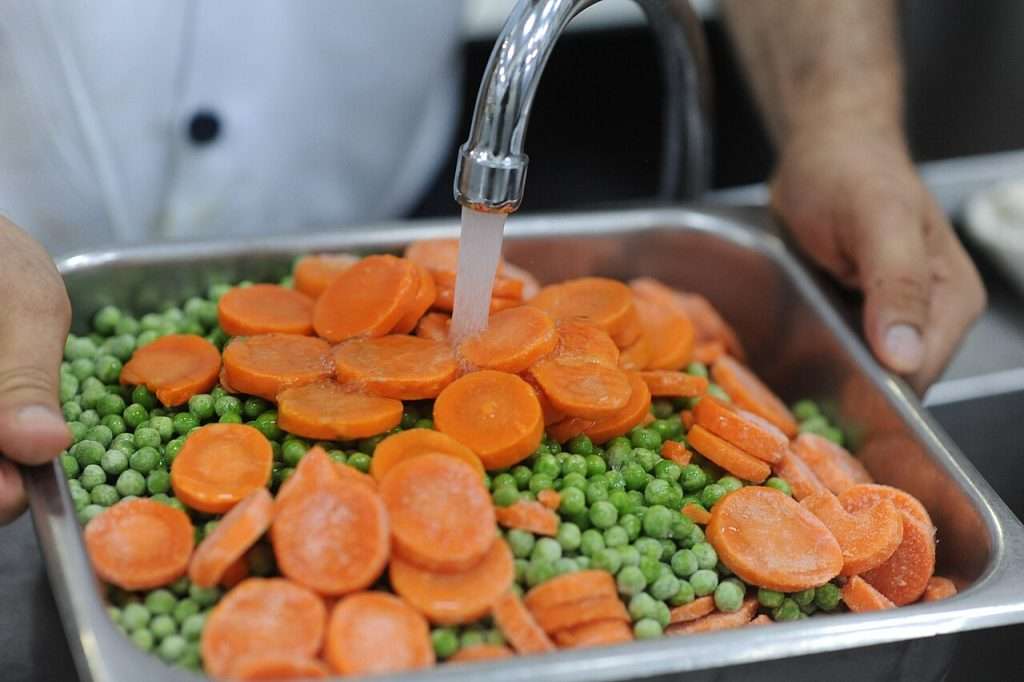
Quick freezing is the step that decides whether frozen vegetables, fruit, seafood, dumplings or meat products reach the customer with good texture and shelf life. Chinese manufacturers build a wide range of IQF (individually quick frozen) tunnel freezers, spiral freezers and plate freezers, from compact units for small processors to long fluidized-bed lines for export vegetable plants. This guide explains what to specify, how to judge build quality and how to test a quick freezer before it leaves China.
Types of quick freezing equipment
- Straight-belt tunnel freezers – a stainless mesh or solid belt carries product through a cold air tunnel. Common for dumplings, patties, fillets and bakery items.
- Fluidized-bed IQF freezers – cold air is blown up through a perforated tray or belt so small pieces (peas, diced carrots, corn, berries, shrimp) float and freeze individually without clumping.
- Spiral freezers – a self-stacking or drum-driven belt spirals around a vertical axis, giving a long dwell time on a small floor area. Typical for ready meals, chicken parts and buns.
- Plate (contact) freezers – product is pressed between refrigerated plates; widely used for block-frozen fish and shrimp on land or at sea.
- Cryogenic tunnels – use liquid nitrogen or CO2 instead of a mechanical refrigeration system; lower equipment cost but ongoing gas cost and supply logistics.
What to specify in your RFQ
Quick freezer quotations vary widely because suppliers make different assumptions. Give them the same data so you can compare quotations fairly:
- Product, piece size and shape, and inlet temperature (for example blanched vegetables at around room temperature, or cooked product straight from the cooker).
- Required output in kg/h and target core temperature at the outlet (commonly -18 °C, confirm your own standard).
- Refrigerant and compressor preference: ammonia, freon/HFC blends or CO2 systems, and whether you want the condensing unit included or will connect to an existing plant room.
- Ambient conditions at your site (room temperature, cooling water availability, altitude) and your local power supply.
- Belt width, belt material, and whether you need a pre-cooler, dewatering shaker, glazing unit or packing table at the outlet.
- Cleaning method: CIP spray system, defrost type (water, hot gas or air) and access doors for manual sanitation.
A clear technical specification saves weeks of back-and-forth; our guide on writing a machinery RFQ explains the structure.
Key quality points
- Evaporator design – fin spacing, coil material (stainless, aluminium or galvanized) and the number of evaporators decide how long the freezer runs between defrosts.
- Insulated enclosure – panel thickness, foam density and how joints and door seals are made. Poor joints cause ice build-up and energy loss.
- Food-contact materials – belts, frames and trays in contact with product should be food-grade stainless steel or approved plastics. Ask for material certificates.
- Compressor and valves – ask which brand and model of compressor, expansion valves and controls are used, and whether spares are available in your country.
- Hygienic design – sloped surfaces, open frames, no hollow sections where water can collect, and easy belt removal.
- Controls – PLC with belt-speed and fan control, temperature logging and alarms. Confirm the HMI language.
Safety and compliance
- Refrigeration systems are often covered by pressure equipment rules in the destination market. Confirm early whether you need CE/PED, ASME or local approval for vessels and piping.
- Ammonia systems need leak detection, ventilation and trained installers; many buyers choose freon or CO2 for smaller plants for this reason.
- Electrical panels should match your voltage and frequency and your local wiring standards. See our guide to CE marking for machinery from China.
- Emergency stops, door interlocks and person-trapped alarms inside large tunnels are basic requirements.
Testing before shipment
A quick freezer is hard to fix once it is installed, so test it in China as far as possible. Our factory acceptance test guide covers the general method. For freezers, focus on:
- Pull-down test: how long the tunnel takes to reach set temperature, and whether it holds it under load.
- Product test with real or similar product, measuring core temperature at the outlet with a calibrated probe.
- Belt tracking, speed range, noise and vibration.
- Pressure/leak test records for the refrigeration circuit and checking welds and insulation.
- Defrost cycle and CIP function, plus all alarms and safety interlocks.
Some large freezers are shipped in sections and only fully tested on site. In that case agree in the contract which tests happen in China and which happen during installation and commissioning.
Shipping and spare parts
- Tunnel and spiral freezers are bulky; ask the supplier for a loading plan and whether open-top or flat-rack containers are needed. See shipping machinery from China.
- Insulated panels must be protected from crushing and moisture during transit.
- Refrigerant is usually charged on site; confirm who supplies it and the installation scope.
- Order a spares kit with belt sections, fan motors, door seals, sensors and solenoid valves.
Frequently asked questions
Is an IQF fluidized-bed freezer or a spiral freezer better for my product?
Small, loose pieces such as peas, diced vegetables and berries usually suit fluidized-bed IQF freezers. Larger or soft items such as dumplings, buns and ready meals usually suit straight-belt tunnels or spirals. Send product samples or photos to suppliers and ask for their recommendation and dwell-time calculation.
How long does it take to build a tunnel freezer in China?
It depends on size and customization. Standard models are often quicker than fully custom lines, but always confirm the production schedule with the supplier and allow extra time around Chinese holidays.
Can a Chinese freezer connect to my existing refrigeration plant?
Often yes, if the supplier designs the evaporators for your refrigerant, suction temperature and capacity. Share your plant room data and have a local refrigeration engineer review the design.
Source IQF and tunnel freezers with Supbon Sourcing
Supbon Sourcing helps overseas food processors and equipment dealers find suitable Chinese freezer manufacturers, compare offers, check factories and inspect equipment before shipment, as part of our food processing machinery sourcing service. If you are planning a vegetable, seafood or ready-meal freezing line, contact Supbon Sourcing with your product, capacity and site details and we will help you get comparable quotations.