
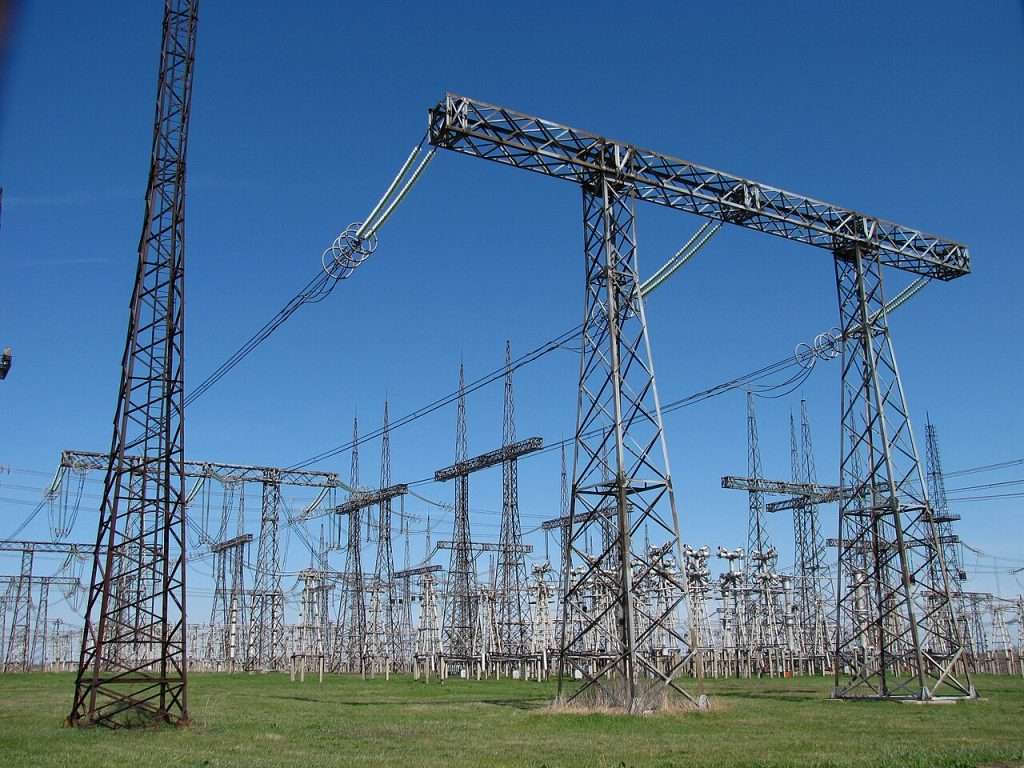
Short answer: you can source distribution transformers, compact substations, medium-voltage switchgear and low-voltage panels from China at competitive prices, but only if you buy against a written technical specification, check type test reports for the exact design, and witness routine tests before shipment. The biggest risks are undersized materials (for example aluminium windings or lower-grade core steel where copper and a better grade were quoted), losses above the agreed values, and type test reports that do not match the rating you are buying.
Infrastructure, solar and wind projects, mines, factories and real estate developments all need transformers, switchgear and electrical panels. Chinese manufacturers supply a large share of the world’s electrical equipment, with clusters in Jiangsu, Zhejiang, Shandong, Henan and Guangdong. Prices are attractive, but electrical equipment must meet strict standards and pass tests, so buyers need clear technical specifications and inspection. This guide explains how to source transformers and switchgear from China, written for EPC contractors, utilities, distributors and industrial buyers.
1. Products commonly sourced from China
- Distribution transformers: oil-immersed and dry-type (cast resin), pole-mounted and pad-mounted.
- Power transformers for substations and generation projects.
- Compact (box-type) substations combining transformer, MV and LV switchgear.
- Medium-voltage switchgear: air-insulated and gas-insulated (GIS/RMU) switchgear.
- Low-voltage panels: distribution boards, MCCs, capacitor banks.
- Cables and accessories, meters, surge arresters and insulators.
2. Oil-immersed vs dry-type transformers, AIS vs GIS switchgear
Two early choices shape the price, footprint and maintenance of your project. Use the table as a starting point and confirm the choice with your electrical engineer and local utility rules.
| Option | Typical strengths | Typical limitations | Common uses |
|---|---|---|---|
| Oil-immersed transformer | Lower purchase price per kVA, good overload capacity, suits outdoor installation | Needs oil containment and fire precautions; oil leaks must be checked | Utility distribution, outdoor substations, solar and wind farms, mines |
| Dry-type (cast resin) transformer | No oil, lower fire risk, suits indoor installation close to the load | Usually higher price and larger size for the same rating; needs a clean, ventilated room | Buildings, hospitals, factories, data centres, tunnels |
| Air-insulated switchgear (AIS) | Simpler technology, easier to inspect and repair locally | Larger footprint; more sensitive to dust, humidity and altitude | Industrial plants and substations with enough space |
| Gas-insulated switchgear / RMU | Compact, sealed, low maintenance | Higher price; gas handling and repairs need trained staff; check local rules on SF6 or alternative gases | Urban networks, compact substations, wind turbines |
| Compact (box-type) substation | Factory-assembled transformer + MV + LV in one enclosure; faster installation | Enclosure must suit local climate and utility design rules | Solar plants, real estate, temporary or remote sites |
3. Specifications to define
- Rated power (kVA/MVA), voltage ratio, frequency, vector group and tap changer.
- Applicable standards: IEC, IEEE/ANSI, BS, AS/NZS or local utility specifications.
- Losses and efficiency requirements (no-load and load losses), which affect lifetime cost.
- Cooling type, insulation class, altitude and ambient conditions.
- For switchgear: rated voltage and current, short-circuit rating, internal arc classification, protection relays.
- Winding material (copper or aluminium) and core steel grade.
Some details that experienced buyers add to the specification:
- Standard edition and market rules. For example IEC 60076 for power transformers, IEC 62271 for high-voltage switchgear and IEC 61439 for low-voltage assemblies, or IEEE C57 standards for North American projects. Markets such as the EU and the United States also have minimum efficiency or maximum loss rules for distribution transformers; state the regulation that applies to you and ask the supplier to confirm compliance in writing.
- Guaranteed losses and penalties. State maximum no-load and load losses at reference temperature, plus the tolerance and any penalty or rejection rule if measured losses exceed the guaranteed values.
- Tap changer type. Off-circuit (de-energised) tap changers are common on distribution transformers; on-load tap changers are used where voltage must be regulated under load. State the tapping range and step.
- Core material. Grain-oriented silicon steel is standard; amorphous metal cores are offered by some factories for lower no-load losses. Ask for the steel grade and supplier.
- Insulating liquid. Mineral oil or natural/synthetic ester liquids, which some projects specify for higher fire point or environmental reasons.
- Accessories. Bushings, conservator or hermetically sealed tank, Buchholz relay, oil level and temperature indicators, pressure relief device, cable boxes, wheels and lifting lugs.
- Site conditions. Altitude above 1000 m, high ambient temperature, coastal salt or desert dust can require derating, longer creepage distances or special paint systems.
- For switchgear: busbar rating, number and type of feeders, breaker or load-break switch type, CT and VT ratios, relay brand and protection functions, communication protocol for SCADA, and the IAC (internal arc) classification you need.
Our guide on how to write an RFQ and technical specification explains how to put these requirements into a document Chinese suppliers can quote against.
4. Tests and certificates
- Type test reports from recognised laboratories for the design or rating you buy.
- Routine tests on every unit: ratio, resistance, losses, impedance, insulation and dielectric tests.
- Special tests such as temperature rise or impulse tests when required by the project.
- Utility or project approvals and factory qualification if required.
Ask for test procedures before production and witness the routine tests at the factory. See our factory acceptance test guide.
| Test | Transformer or switchgear | What it shows | When |
|---|---|---|---|
| Winding resistance | Transformer | Correct conductor size and good joints | Every unit (routine) |
| Voltage ratio and vector group | Transformer | Correct windings and connections on every tap | Every unit (routine) |
| No-load loss and current | Transformer | Core quality; compare with guaranteed values | Every unit (routine) |
| Load loss and impedance | Transformer | Winding design and material; compare with guarantee | Every unit (routine) |
| Applied and induced voltage tests | Transformer | Insulation strength | Every unit (routine) |
| Temperature rise, lightning impulse | Transformer | Cooling and insulation design | Type or special test, often on one unit or by report; depends on standard and voltage level |
| Power-frequency withstand on main circuit | Switchgear | Insulation of each panel | Every unit (routine) |
| Main circuit resistance | Switchgear | Busbar and contact joints | Every unit (routine) |
| Mechanical operation and interlocks | Switchgear | Breakers, switches and interlocks operate correctly | Every unit (routine) |
| Secondary wiring and relay function | Switchgear | Protection and control circuits wired as per drawings | Every unit (routine) |
| Internal arc, short-time withstand current | Switchgear | Safety and fault withstand of the design | Type test report for the same design and rating |
When you review a type test report, check that the laboratory, the model, the rated voltage and current, and the short-circuit rating match what you are buying. A report for a different rating or an older design does not prove your equipment.
5. Common mistakes and red flags with Chinese suppliers
- Material substitution. Copper windings quoted but aluminium delivered, or a lower core steel grade. Specify materials in the contract and verify them during production and inspection.
- Losses not guaranteed. A quotation with “losses as per standard” but no figures makes it hard to reject a unit with high losses. Ask for guaranteed values.
- Borrowed type test reports. Reports from another manufacturer, another rating or with unclear laboratory details. Ask for the full report, not just the cover page.
- Unclear component brands. Breakers, relays, bushings and tap changers have a large effect on reliability. List the brands or approved alternatives.
- Trader presented as factory. Large electrical equipment should come from a manufacturer with a real test bay. See how to verify a Chinese supplier.
- Wrong frequency or voltage. 50 Hz and 60 Hz designs differ. Confirm system voltage, frequency and control voltages; our guide to voltage and frequency for imported equipment covers the basics.
- Full payment before tests. Keep a meaningful balance until routine tests are witnessed and the report is approved.
6. Inspection points
- Verify nameplate data, dimensions, bushings, accessories and paint thickness.
- Check oil leakage on oil-immersed units.
- Check wiring, labelling and relay settings in switchgear.
- Verify materials (copper vs aluminium) against the contract.
- Inspect packing, shock indicators and moisture protection.
A practical pre-shipment checklist for project buyers:
- Routine test report signed and matching serial numbers on each nameplate.
- Measured losses and impedance within the guaranteed values and tolerances.
- Tank welds, gaskets and valves free of leaks after the oil-tightness test, where applicable.
- Paint system and thickness as specified for the site environment.
- Switchgear panels match the single-line diagram; CT ratios, relay models and settings as agreed.
- Interlocks prevent unsafe operation (for example, earthing switch and breaker interlocks).
- Drawings, manuals, test reports, certificates and spare parts packed and listed.
7. Shipping, installation and spare parts
Distribution transformers and switchgear usually ship in containers; large power transformers need special transport, impact recorders and careful handling. See shipping machinery from China.
Some practical points: oil-immersed units are often shipped filled with oil if size allows, while larger units may ship with nitrogen or dry air and the oil sent separately; confirm this with the factory. Switchgear panels should be wrapped against moisture and shipped with desiccant. For projects with many items from several factories, it often helps to consolidate shipments and check that the packing list matches the project equipment list.
For installation, agree whether the supplier will send an engineer for supervision and commissioning, or provide remote support, and who pays travel costs. Order commissioning spares and recommended spares with the main order: fuses, gaskets, bushings, relays, breaker spare parts and paint for touch-up. Local availability of spares is a good reason to specify widely used component brands.
Frequently asked questions
Can Chinese transformers meet IEC or IEEE standards?
Many manufacturers produce to IEC and IEEE standards and export worldwide. Check type test reports for the specific design.
Do you source generators and motors too?
Yes. See diesel generators and electric motors and gearboxes.
Can you consolidate electrical equipment for a project?
Yes. We can coordinate several suppliers and ship equipment together.
How long does transformer production take in China?
Lead times vary with rating, design and factory workload. Standard distribution transformers are often faster than custom power transformers, which can take several months. Confirm the schedule, including testing, with the supplier before ordering.
Should I choose copper or aluminium windings?
Both are used successfully. Copper usually gives a more compact design; aluminium is lighter and often cheaper. The important point is that losses, dimensions and short-circuit strength meet your specification, and that the material delivered matches the contract.
Source electrical equipment with Supbon Sourcing
Supbon Sourcing helps project buyers compare Chinese transformer and switchgear manufacturers, review technical documents, witness tests and coordinate shipping. Learn more about our custom industrial equipment sourcing. For our service fees, see sourcing agent fees.
Have a project equipment list? Send it to us for a quote.