
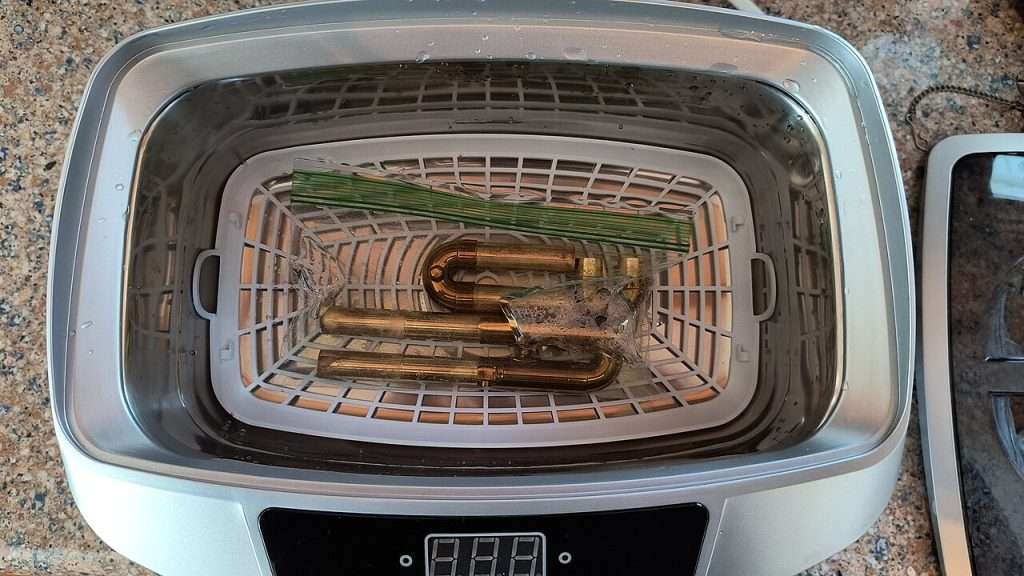
Clean parts are essential in machining, automotive repair, hydraulics, electronics, medical device and precision engineering. Oil, chips, polishing compound and dust left on parts can cause assembly problems, coating failures and short service life. Industrial ultrasonic cleaners and parts washers remove this contamination, and China has a large supplier base that builds everything from single-tank benchtop units to automatic multi-stage cleaning lines with rinsing and drying. Buyers can find good value, but cleaning results depend on matching the machine to the part, the contamination and the cleaning chemistry. This guide explains what to specify and how to test before you buy.
Types of industrial cleaning machines
- Single-tank ultrasonic cleaners – for workshops, maintenance and small batches. Usually manual loading with a basket.
- Multi-tank ultrasonic lines – wash, rinse and dry stations in sequence, manual or with an overhead gantry or robot for transfer.
- Spray cabinet washers – rotating basket with high-pressure spray, good for large greasy parts such as engine blocks and gearbox housings.
- Through-feed conveyor washers – parts travel on a belt through wash, rinse and blow-off zones; suited to high-volume production.
- Combined systems – ultrasonic tanks plus spray rinse, hot air or vacuum drying, often designed for a specific part family.
What to specify
- Parts: material, size, weight, geometry (blind holes, internal channels) and parts per hour. Send drawings and photos.
- Contamination: cutting oil, coolant, polishing paste, carbon, chips, rust or fingerprints.
- Cleanliness requirement: visual only, or a measured standard such as residue weight or particle count. If your customer specifies a technical cleanliness standard, share it.
- Tank size and number of stations, plus basket size and load weight.
- Ultrasonic frequency and power: lower frequencies are often used for heavy contamination and robust parts, higher frequencies for delicate or precision parts. Ask the supplier to explain their choice.
- Cleaning chemistry: water-based detergent, alkaline or neutral cleaners. Confirm the tank and seal materials are compatible. Solvent cleaning needs very different, explosion-protected equipment.
- Heating, filtration and oil removal: heater power, filter type and oil skimmer or separator.
- Drying: hot air, compressed air blow-off or vacuum drying.
- Electrical supply: voltage, phase and frequency. See our electrical specification guide.
Key quality points
- Transducers and generators: these are the heart of an ultrasonic cleaner. Ask how transducers are bonded to the tank, how many are fitted and what generator is used.
- Tank material and thickness: stainless steel grade and wall thickness affect cavitation erosion and service life.
- Welding: tank welds should be smooth and fully sealed to avoid leaks and contamination traps.
- Filtration and circulation: good filtration keeps the bath effective longer and reduces chemical use.
- Automation: for automatic lines, check the PLC, servo or motor brands, programming and safety logic.
- Insulation and lids: reduce heat loss, noise and evaporation.
Safety and compliance
- Electrical safety and correct earthing, as water and electricity are close together. Ask for IP ratings of control boxes.
- Over-temperature protection and low-level protection for heaters.
- Noise: ultrasonic tanks can be loud; lids or enclosures may be needed to meet workplace noise limits.
- Guarding and light curtains for automatic transfer systems.
- For the EU and UK, CE marking is required. See our CE marking guide.
- Check local rules on discharge of used cleaning solution and oily waste water.
Testing before shipment
- Send real dirty parts to the supplier for a cleaning trial, and ask for before-and-after photos and video.
- If you have a measurable cleanliness standard, agree how it will be checked and by whom.
- Fill tanks with water and run all stations to check for leaks, heating time and temperature control.
- Check ultrasonic output across the tank, for example with a simple foil test, and confirm generator settings.
- For automatic lines, run full cycles with the planned basket loads and record cycle time.
Put the test plan in your contract using our factory acceptance test guide. If you are buying several items from different factories, see how to consolidate them into one container.
Shipping and spare parts
- Drain and dry all tanks and pumps before packing, protect transducer areas from impact, and use strong wooden crates. See shipping machinery from China.
- Recommended spares include heaters, pump seals, filters, level sensors, fuses and, for critical lines, a spare ultrasonic generator.
- Ask for wiring diagrams and a parts list with specifications so you can source equivalents locally. Our guide on machinery spare parts sourcing covers this in more detail.
Frequently asked questions
Which ultrasonic frequency should I choose?
Lower frequencies typically give stronger cavitation for heavy contamination on robust parts, while higher frequencies are gentler and suit delicate or finely finished parts. Some machines offer dual frequency. A cleaning trial with your parts is the most reliable way to decide.
Is an ultrasonic cleaner or a spray washer better for my parts?
Ultrasonic cleaning is good for complex shapes, small holes and fine contamination. Spray washers often suit large, heavy parts with loose oil and chips. Many lines combine both.
Can a Chinese supplier design a custom cleaning line?
Yes, many manufacturers build lines around specific parts. Provide clear part data and cleanliness targets, and review the layout drawing before production. See our article on custom machine development in China.
Source industrial cleaning machines with Supbon Sourcing
Supbon Sourcing, based in Jinan, Shandong, helps overseas buyers find and verify Chinese manufacturers of ultrasonic cleaners and parts washers, compare technical offers, organise cleaning trials and inspect machines before shipment. See our custom industrial equipment sourcing service, or contact us with your part drawings and cleaning requirements.