
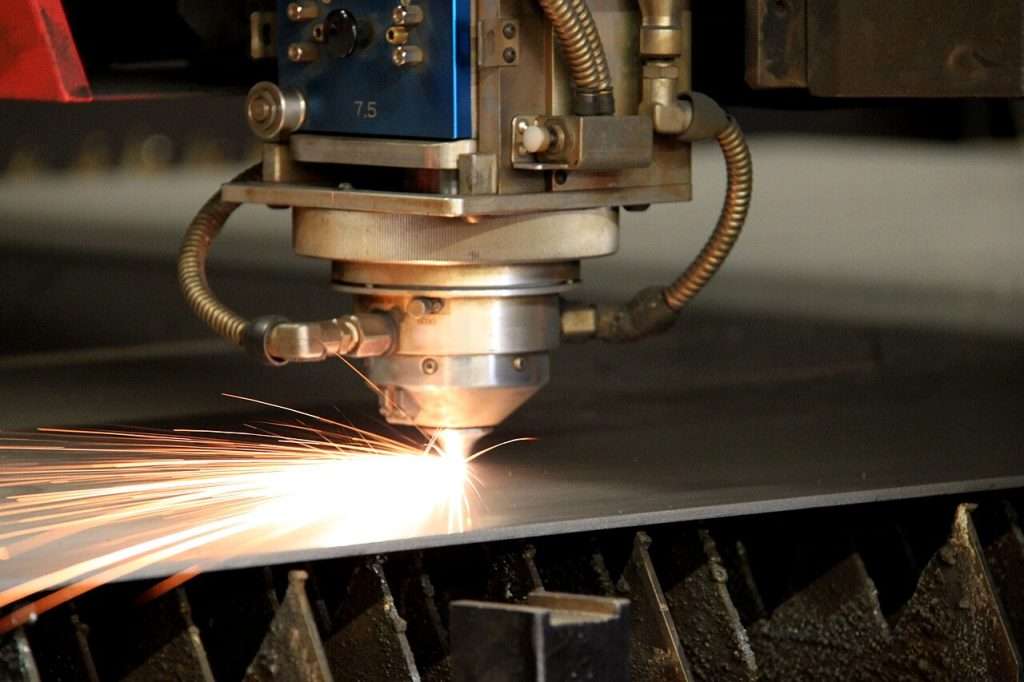
Short answer: choose a fiber laser cutting machine by the thickness and material you cut every day, not the maximum thickness in the brochure. For most job shops cutting mild steel up to about 12 mm and stainless steel up to about 6 mm, a 3 kW to 6 kW source on a 3015 or 4020 bed is a common starting point. Higher power (12 kW and above) mainly pays off when thick plate or high-speed nitrogen and air cutting are a large share of your work.
This guide is written for importers, dealers and metal fabricators buying fiber laser cutters from Chinese manufacturers. It explains how laser power, bed size, machine structure and key components affect cutting results and price, what red flags to watch for in quotations, and what to test before the machine leaves the factory. For a broader view of the market, see our guide to laser equipment sourcing in Jinan.
1. Start with your parts, not the machine
Before you ask any supplier for a quotation, write down what you will actually cut. A sourcing engineer will ask for this list first because it decides almost every other specification:
- Materials: carbon steel, stainless steel, aluminium, galvanised sheet, brass or copper. Reflective metals (aluminium, brass, copper) need a source and head that the supplier confirms are suitable for them.
- Thickness range: the thickness you cut most often (for example 80% of jobs) and the maximum you cut occasionally.
- Sheet size: the standard sheet sizes you buy locally, such as 1250 x 2500 mm, 1500 x 3000 mm or 2000 x 6000 mm.
- Edge quality: whether parts go straight to welding or painting, or whether an oxide edge is acceptable.
- Volume and shifts: one shift or 24-hour production, and how much manual loading you can accept.
- Tubes: if you also cut tubes and profiles, decide between a combined sheet-and-tube machine and a dedicated laser tube cutting machine.
Send this list, with a few sample drawings, in your RFQ. Our guide on how to write a machinery RFQ explains the format.
2. How to choose laser power
Laser power is the biggest single driver of price. Suppliers often quote the maximum thickness a source can cut. In production you usually want to work well below that figure, where speed is good and the edge is clean.
The table below gives typical, indicative ranges for good-quality production cutting. Real results depend on the laser source, cutting head, gas purity, material grade and operator settings, so always confirm with the supplier using your own sample parts.
| Laser power | Carbon steel (O2), typical production range | Stainless steel (N2), typical production range | Usually suits |
|---|---|---|---|
| 1.5 – 2 kW | Up to about 8–10 mm | Up to about 4–5 mm | Thin sheet, signage, cabinets, small workshops |
| 3 kW | Up to about 12–14 mm | Up to about 6–8 mm | General job shops, enclosures, light fabrication |
| 6 kW | Up to about 16–20 mm | Up to about 10–12 mm | Busy job shops, faster thin-sheet cutting with N2 or air |
| 12 kW | Up to about 25 mm and above | Up to about 20 mm | Structural steel, machinery frames, high-volume plants |
| 20 kW and above | Thick plate, often 30 mm and more | Thick stainless, high-speed medium plate | Heavy fabrication, steel service centres |
Two practical points are often missed:
- Higher power is not only about thickness. On 3–8 mm material, more power usually means much faster cutting with nitrogen or compressed air. If thin sheet is most of your work, the extra speed can justify a higher-power source.
- Running costs rise with power. Electricity, the chiller, nozzles, protective lenses and gas consumption all go up. Ask the supplier for the total installed power of the machine, chiller, extraction and air system, not only the laser rating.
3. How to choose bed size and machine layout
Bed size codes describe the working area. A 3015 bed is about 3000 x 1500 mm, a 4020 is about 4000 x 2000 mm and a 6025 is about 6000 x 2500 mm. Match the bed to the sheets you buy locally, with a little margin.
| Configuration | Advantages | Limitations | Best for |
|---|---|---|---|
| Open single table | Lowest price, easy loading, small footprint | Machine stops while you load and unload; no full enclosure | Low power (often up to 3 kW), low volume |
| Exchange (shuttle) table, open or semi-enclosed | Load the next sheet while cutting; much higher machine utilisation | Higher price and longer footprint | Most production job shops |
| Fully enclosed with exchange table | Laser safety, lower fume and noise exposure, better dust extraction | Highest price, needs more space and height | 6 kW and above, or where safety rules are strict |
| Automatic loading and unloading tower | Lights-out or multi-shift running | Large investment; needs consistent sheet stock | High-volume plants |
For higher-power machines, a fully enclosed cabin with laser-safe viewing windows is strongly recommended and may be required by local regulations. Check your country’s rules on Class 4 laser equipment and on CE marking for imported machinery if you sell into Europe.
4. The specifications that matter in a quotation
Two machines with the same power and bed size can differ greatly in quality. When you compare quotations, ask each supplier to state these items in writing:
- Laser source: brand, model and power. Chinese sources are widely used and international sources are available; ask which one is quoted and what warranty the source maker gives.
- Cutting head: brand and model, autofocus or manual focus, and whether it is rated for the source power.
- Controller and nesting software: brand, language options, whether nesting software is included and how many licences.
- Bed and gantry: welded steel frame (ask whether it is stress-relieved) and gantry material, such as cast or extruded aluminium beams.
- Motion system: servo motor brand, rack and pinion and linear guide brands, positioning accuracy and repeatability as stated by the supplier.
- Chiller: brand and capacity matched to the laser power, with separate circuits for the source and the head.
- Extraction: zoned extraction under the bed and the fan or dust collector supplied. See our dust collector guide.
- Electrical: voltage, frequency and phase for your country. See voltage and frequency for imported machinery.
- Gas system: proportional valve, gas types supported (O2, N2, air), and whether air cutting needs an extra high-pressure compressor and filtration package.
5. Common mistakes and red flags with Chinese suppliers
- “Maximum thickness” sold as production thickness. A video of one thick cut does not prove stable production quality. Ask for a sustained cutting test on your thickness.
- Unnamed components. Quotations that say “famous brand servo” or “imported head” without a brand and model make comparison impossible and leave room for substitution.
- Undersized chiller or no voltage stabiliser. These save the supplier money but can cause alarms and source damage later.
- Air cutting promised without the air package. Cutting with compressed air needs high pressure and clean, dry, oil-free air. If the quotation does not include a suitable compressor, dryer and filters, budget for them. See our air compressor guide.
- Trading companies presented as factories. Many sellers assemble machines from bought-in parts, which is normal, but you should know who builds the frame and who does final testing. See how to verify a Chinese machinery supplier.
- Vague warranty terms. The laser source, head and machine body often have different warranty periods. Get each one in the contract, along with remote support and spare-part lead times.
- Software licences tied to one computer with no backup. Ask how the licence is transferred if the PC fails.
6. Pre-shipment inspection checklist
Inspect the finished machine at the factory, or through a structured video inspection, before you pay the balance. Our full laser machine pre-shipment inspection checklist goes deeper; the core checks are:
| Check | What to look for |
|---|---|
| Component nameplates | Source, head, controller, servo, chiller and guide brands match the contract |
| Cutting test on your samples | Your drawings, your materials and thicknesses; check edge quality, dross and dimensions |
| Sustained running | Cut continuously for an extended period, not just one sheet; watch for alarms and temperature |
| Accuracy | Measure parts across the whole bed, including corners and large circles |
| Exchange table and automation | Smooth table exchange, no jamming, correct sensors |
| Safety | Enclosure doors, interlocks, emergency stops, warning labels, laser-safe windows |
| Software | English (or required language) interface, nesting software, licence handover |
| Documents | Manuals, electrical diagrams, test report and spare parts list |
If you cannot travel, a well-planned remote video inspection can cover much of this list.
7. Shipping, installation and spare parts
Packing: the bed, gantry, exchange table, chiller and electrical cabinet are usually shipped as separate units. The laser source and head should be protected from moisture and impact, and the cooling water must be drained before shipment to prevent freezing damage. Smaller beds often fit a 20 ft or 40 ft container, while long beds and enclosed machines may need a 40 ft container or special loading; confirm packed dimensions with the supplier. See our export packing guide.
Site preparation: prepare a level concrete floor, stable power supply, gas supply or bottles, compressed air, an extraction route and a clean, temperature-controlled space for the source and chiller.
Installation: agree whether installation is on-site by engineers or by video guidance, who pays for travel, and how many days of training are included. See installation and commissioning with Chinese suppliers.
Spare parts to order with the machine: nozzles in several sizes, protective lenses, ceramic rings, focusing lens if applicable, slats for the cutting bed, filter elements and a spare sensor or two. These are consumables and you do not want to wait for air freight.
Frequently asked questions
Is 3 kW enough for a new job shop?
For many shops cutting mostly thin and medium sheet, 3 kW is a sensible entry point. If you expect a lot of stainless or aluminium work, or want faster cutting on 3–8 mm sheet, compare it with a 6 kW quotation before deciding.
What is the difference between a 3015 and a 4020 bed?
A 3015 bed handles sheets up to about 3000 x 1500 mm, while a 4020 handles about 4000 x 2000 mm. Choose based on the sheet sizes you buy locally and the largest parts you make.
Can a fiber laser cut aluminium and copper?
Yes, fiber lasers can cut reflective metals, but the source and head must be suitable and the thickness range is usually lower than for steel. Ask the supplier to cut your samples and confirm the source is protected against back reflection.
How long is the lead time from China?
Standard configurations are often available within a few weeks, while high-power or customised machines can take longer. Confirm production and test dates in the contract.
Do I need nitrogen, oxygen or compressed air?
Oxygen is typical for carbon steel, nitrogen for a clean stainless or aluminium edge, and compressed air can be a lower-cost option for thinner material on higher-power machines. Many shops use more than one gas.
Source fiber laser cutting machines with Supbon Sourcing
Supbon Sourcing is a machinery sourcing agent based in Jinan, Shandong. We help overseas buyers turn their parts list into a clear specification, compare Chinese laser cutting manufacturers on the same component basis, arrange sample cutting tests, inspect machines before shipment and coordinate export packing. Learn more about our metalworking machinery sourcing service and our CNC machine sourcing, or read about our service fees.
Planning to buy a fiber laser cutter? Send us your materials, thicknesses and sheet sizes and we will help you build a comparable shortlist.